
De-risking a 215k+ User Migration for 3 Digital Banks
The Problem: Three digital banks. A high-stakes migration. 215,042 legacy customers who needed to land somewhere better than where they started.
The Business Risk:Persona assumptions inherited from legacy internet banking didn't map to mobile-first behaviour. The MVP was being designed for users who didn't exist in the way the team imagined. Getting this wrong at migration scale — across 215k users — risked losing the trust of customers the business couldn't afford to lose.
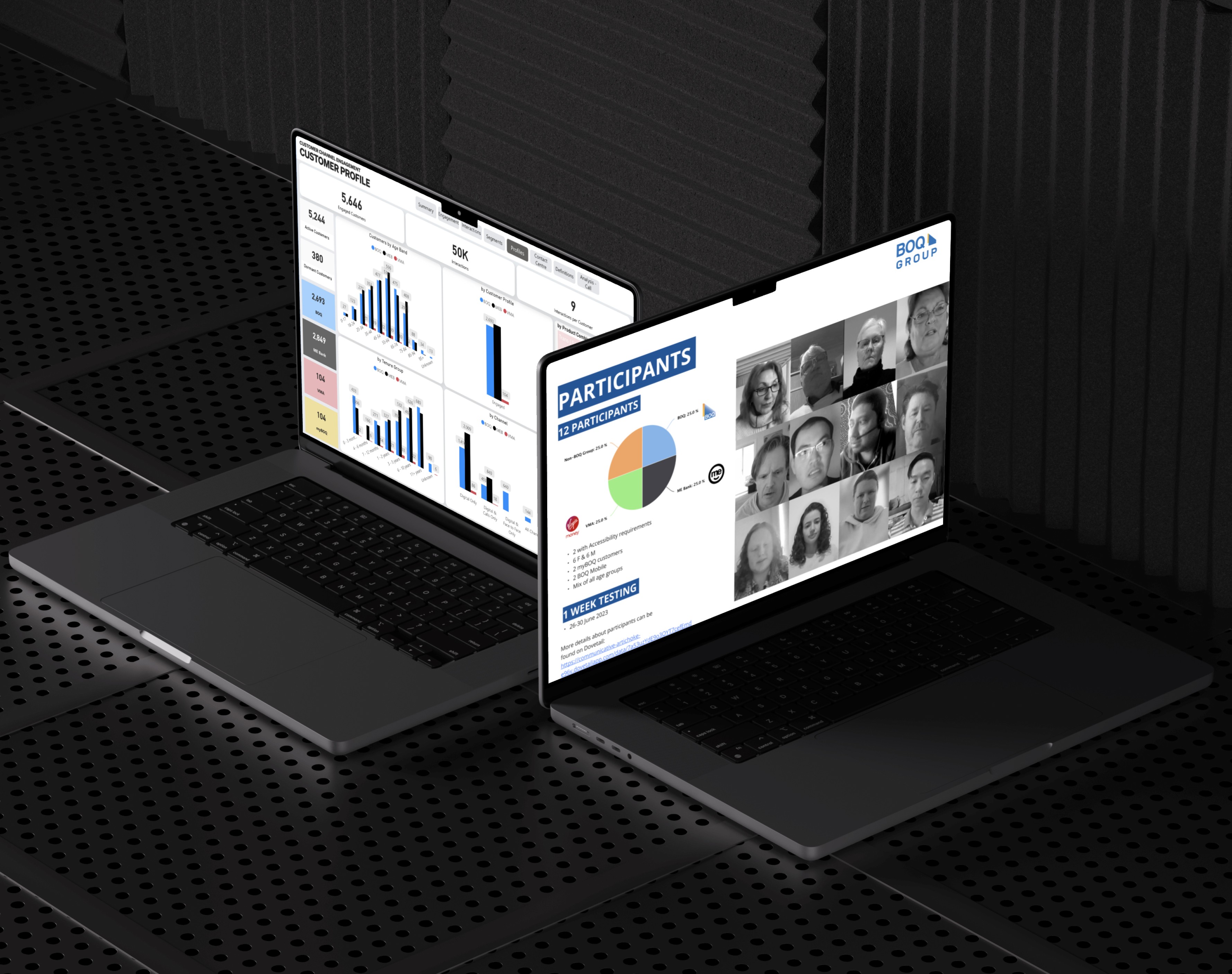
My Role: Led concept testing with 12 participants across 3 brands. Research dismantled the age-based persona model. Behaviour was context-driven, not demographic-driven. Legacy customers weren't less capable. They were using Internet Banking for complex tasks that required depth and control mobile couldn't deliver.
The Outcome: Personas were redefined, feature priority shifted, the migration approach was reshaped around validated mobile-first behaviour patterns and 215,042 users migrated to a platform shaped by what they actually needed.
Client
Virgin Money | ME Bank | Bank of Queensland
Role
Lead Researcher | Service Designer
Stakeholders
Service Design Lead | Development Lead | Product Team
/ Context
3
brands, Mobile-first feature parity (untested assumption)
2
Legacy platforms overdue for retirement
33
%
Customers aged 66+, making accessibility non-negotiable
215K
+
Customers to migrate without losing trust or confidence
How might we replace outdated systems with a modern platform that scales across brands and feels seamless for every customer ?
/ Discovery
What We Wanted to Learn
Before a single screen was designed, we needed to validate the assumptions driving the MVP scope.
What features users expected and valued most on Internet Banking (IB) vs Mobile Banking (MB)
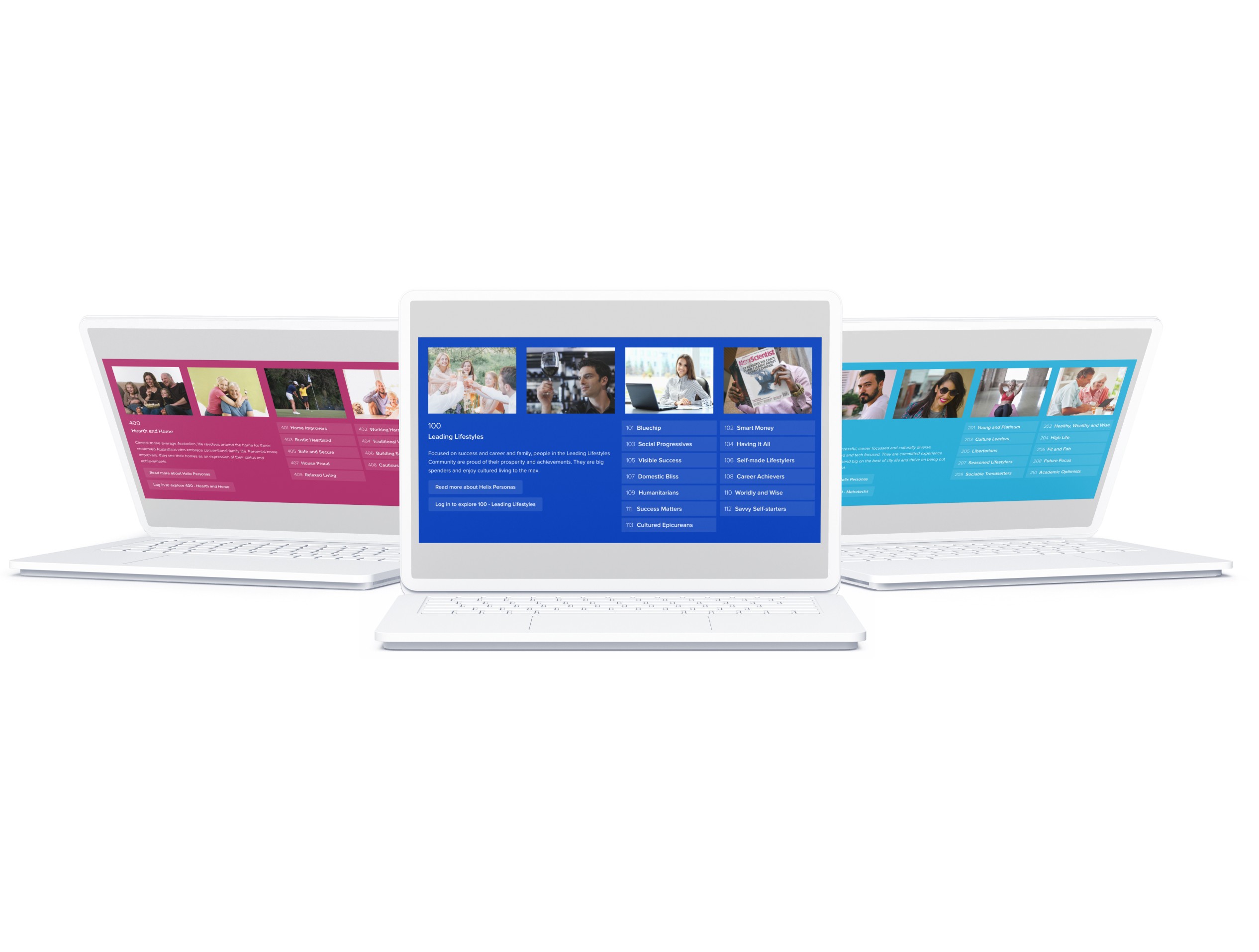
How brand-specific personas influenced those preferences
Whether the proposed flows were intuitive and aligned with user expectations
Where feature parity was essential, and where we could lean into platform strengths
As the Lead Researcher, I:
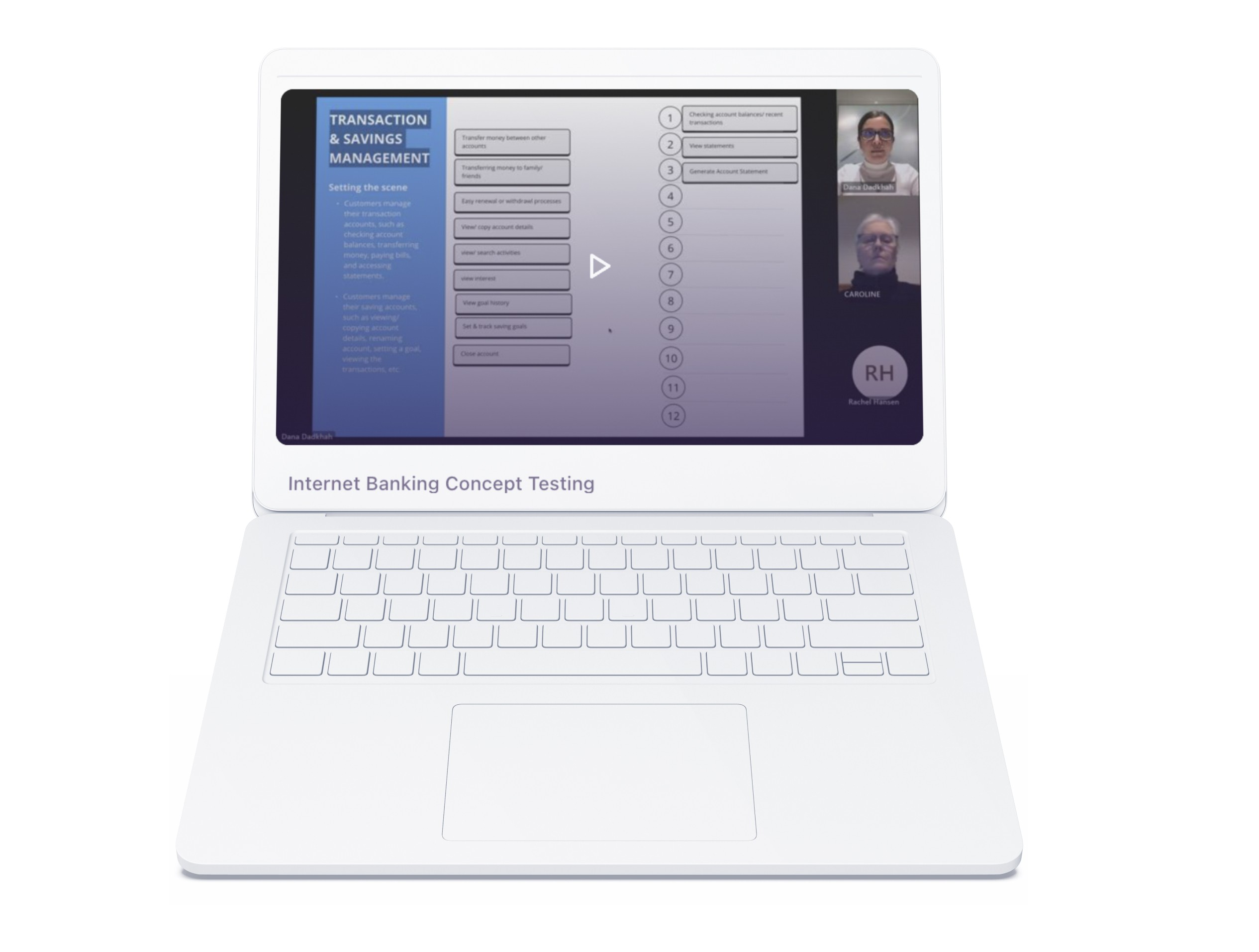
Planned and facilitated moderated concept testing with 12 participants across brands and demographics
Created recruitment screeners and prototypes tailored to test platform-specific expectations
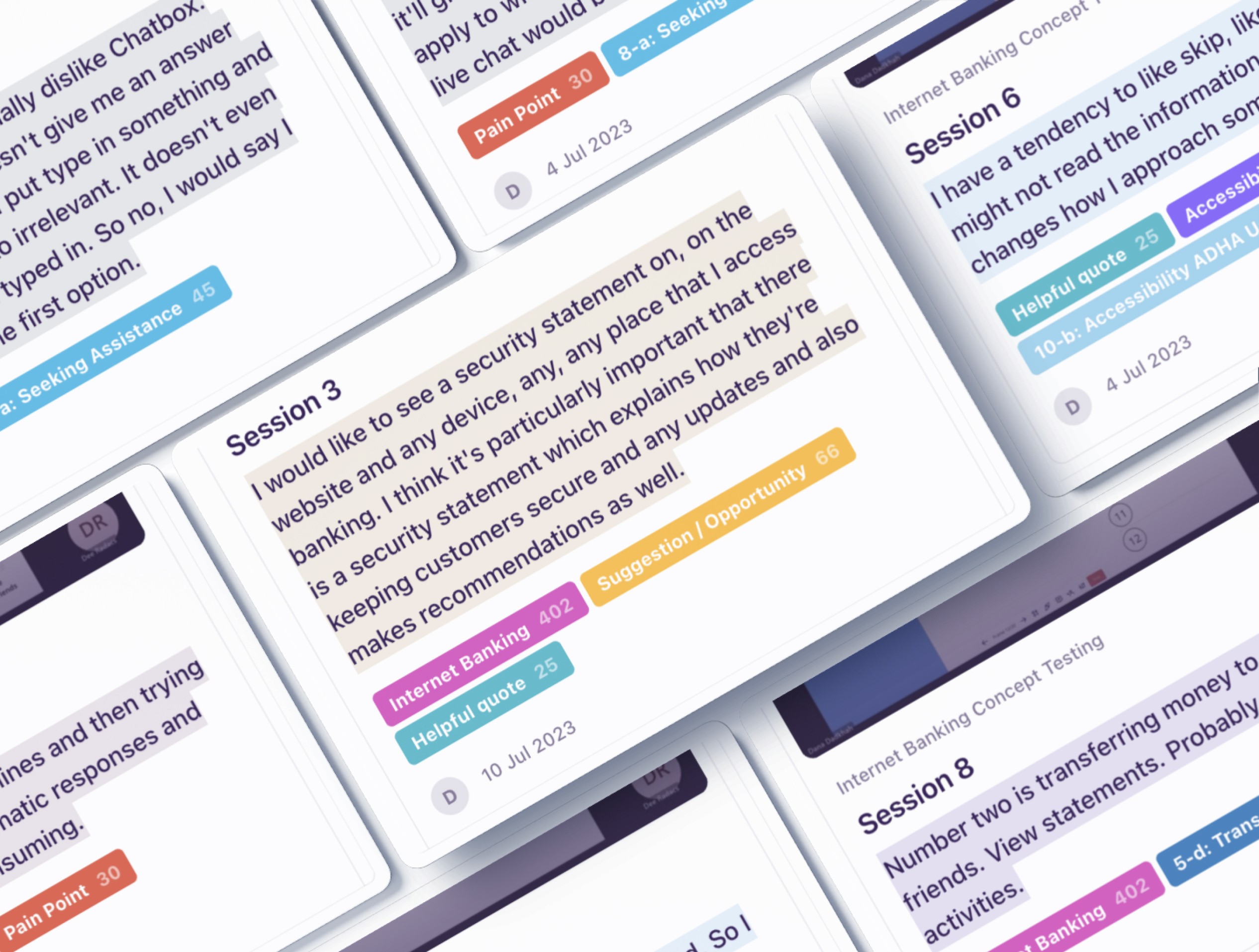
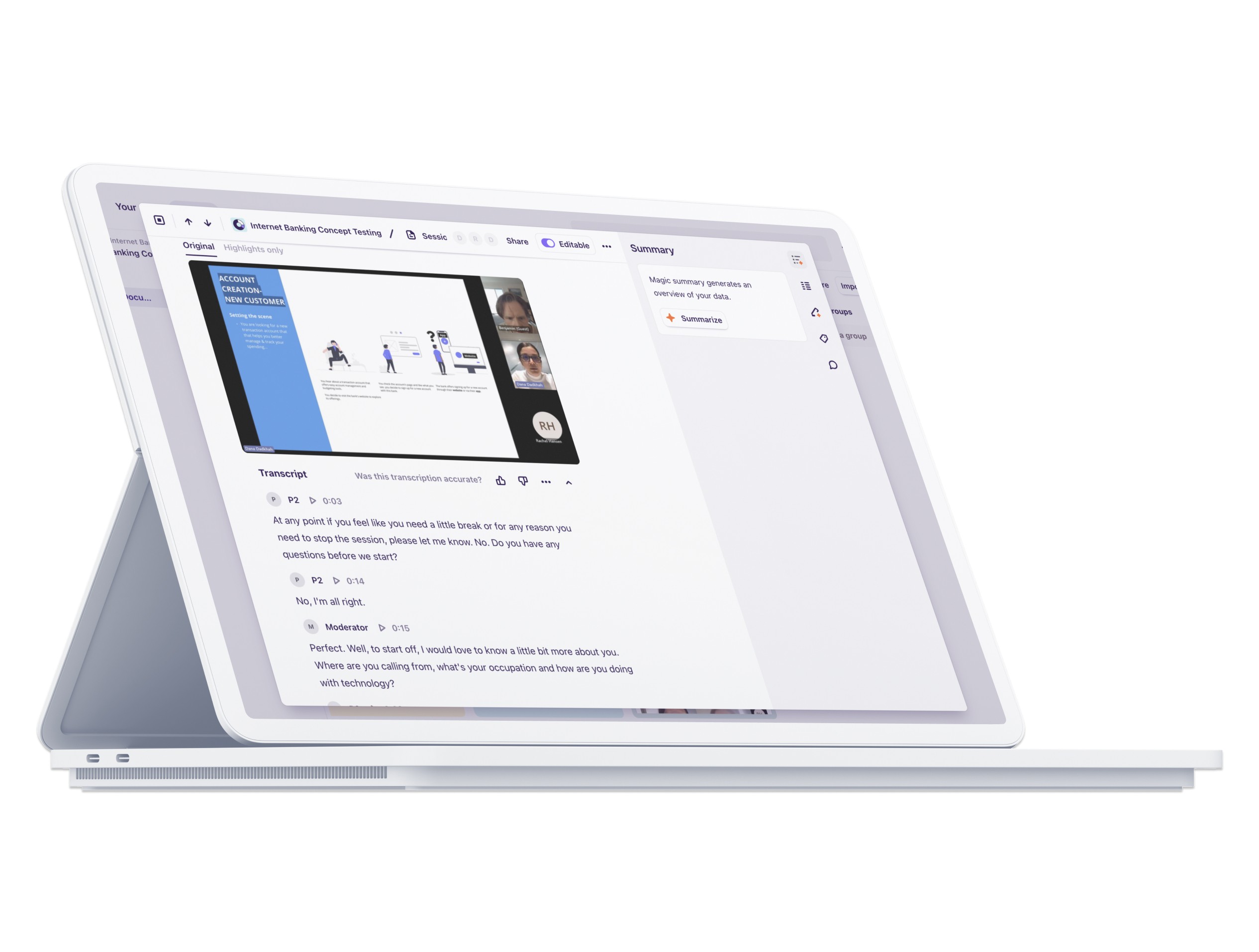
Structured synthesis in Dovetail, ran a stakeholder playback to translate findings into product decisions, and updated brand personas based on what research actually revealed.
Collaborated with the service design team to inform persona refinement and MVP definition
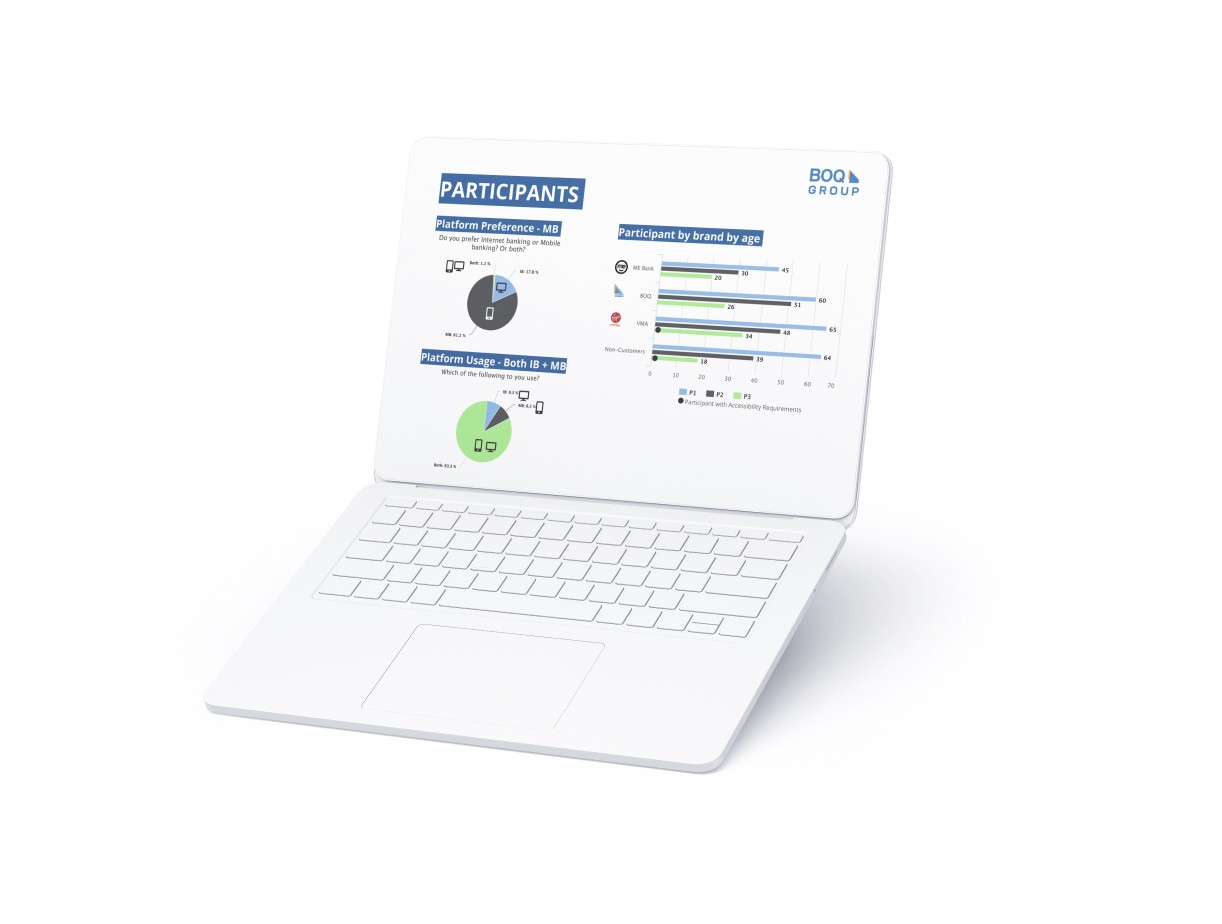
Task-Centric Mental Models
Theme
Users preferred Internet Banking for complex, information-heavy tasks when depth and control mattered more than convenience.
Insight
Feature Expectations
Theme
Users wanted advanced tools on desktop—search, filters, personalisation—not just mobile parity.
Insight
Password-Less Login
Theme
Users favoured secure, seamless login over traditional passwords—accessibility and ease won.
Insight
Support Preferences
Theme
In-app chat beat call centres for quick help; calls were reserved for complex needs.
Insight
These insights dismantled the mobile-first parity assumption entirely. The strategy shifted to context-driven platform design. Each platform scoped for how users actually behaved, not what the team assumed they needed.
/ Design
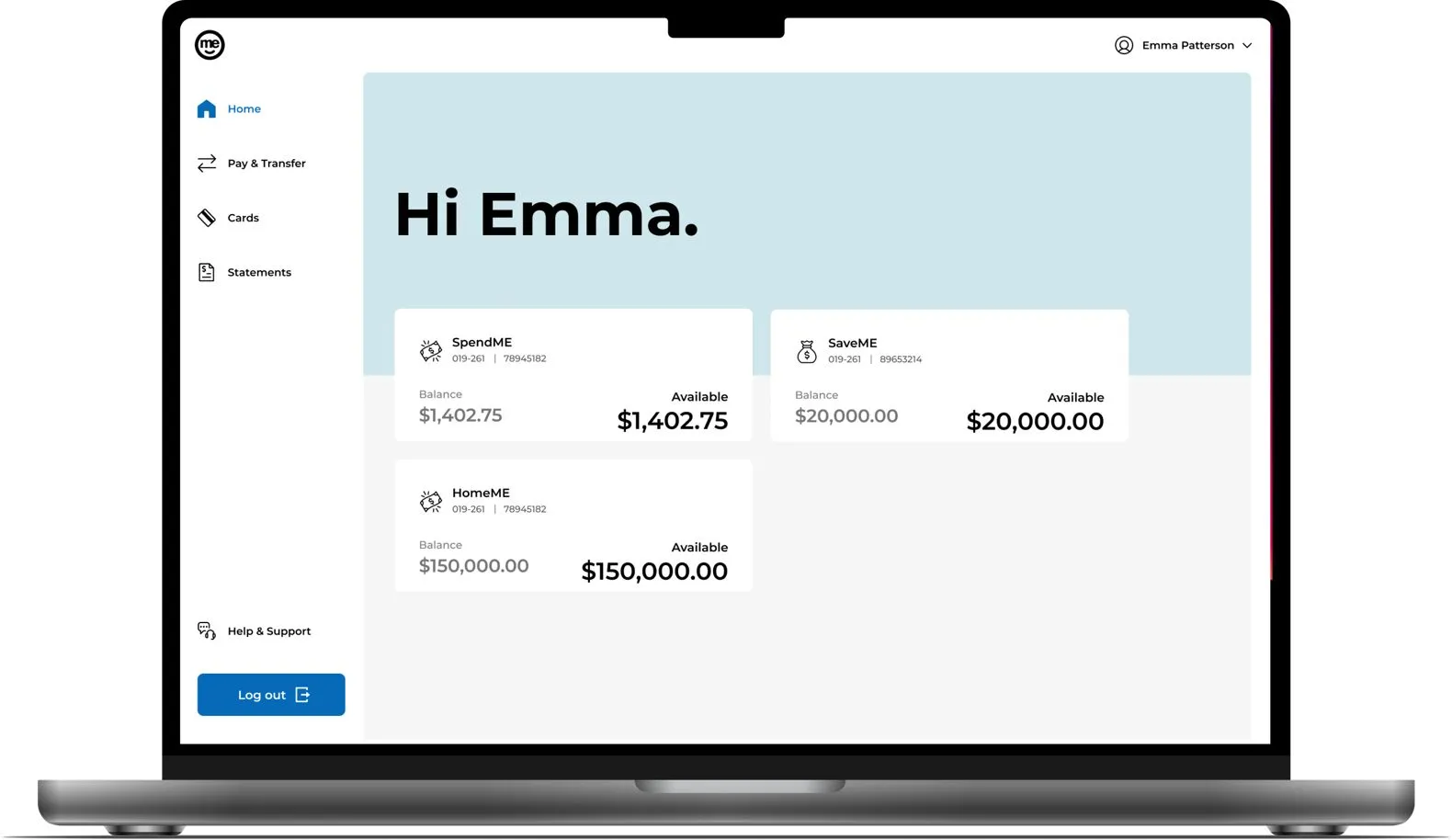
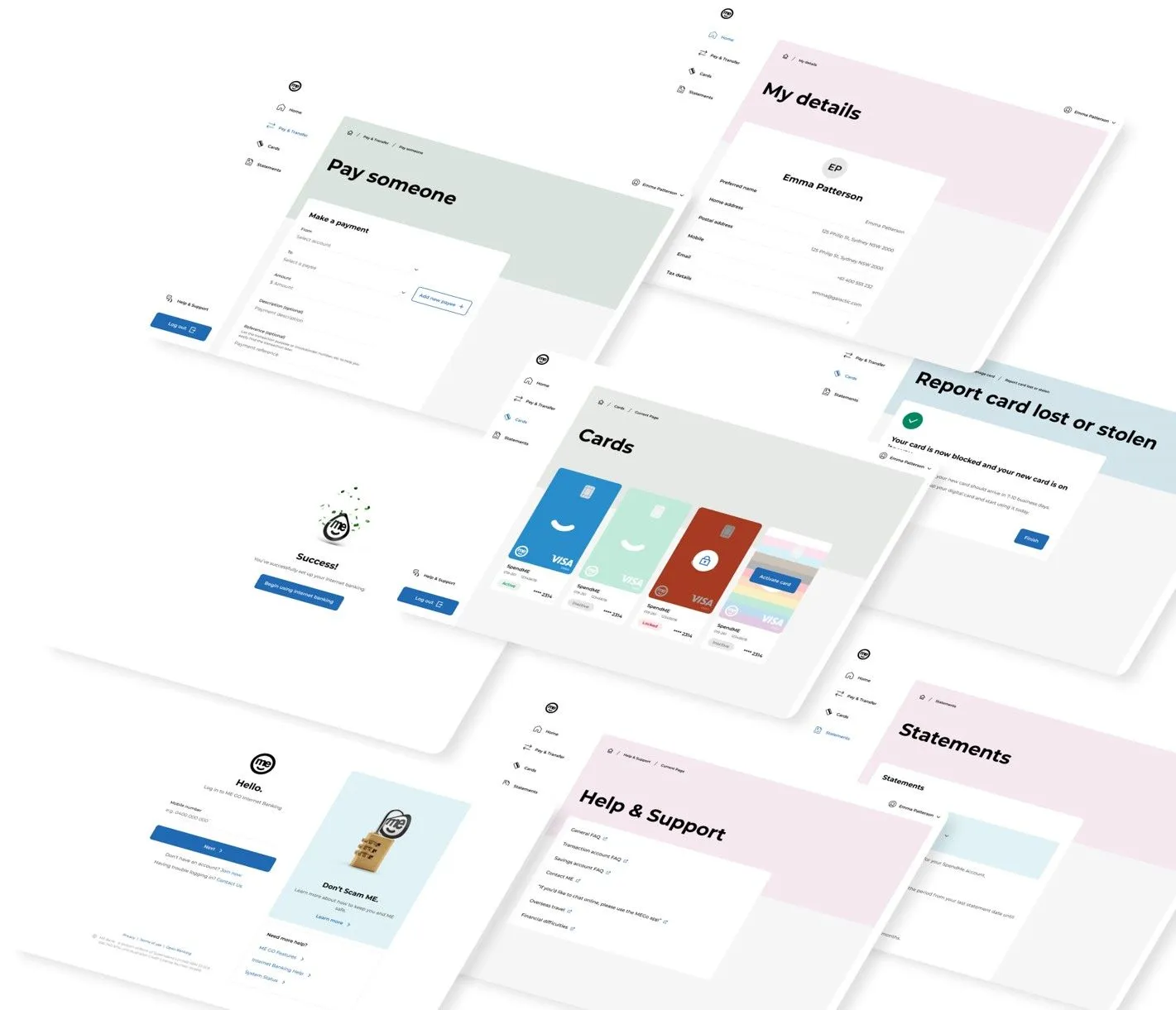
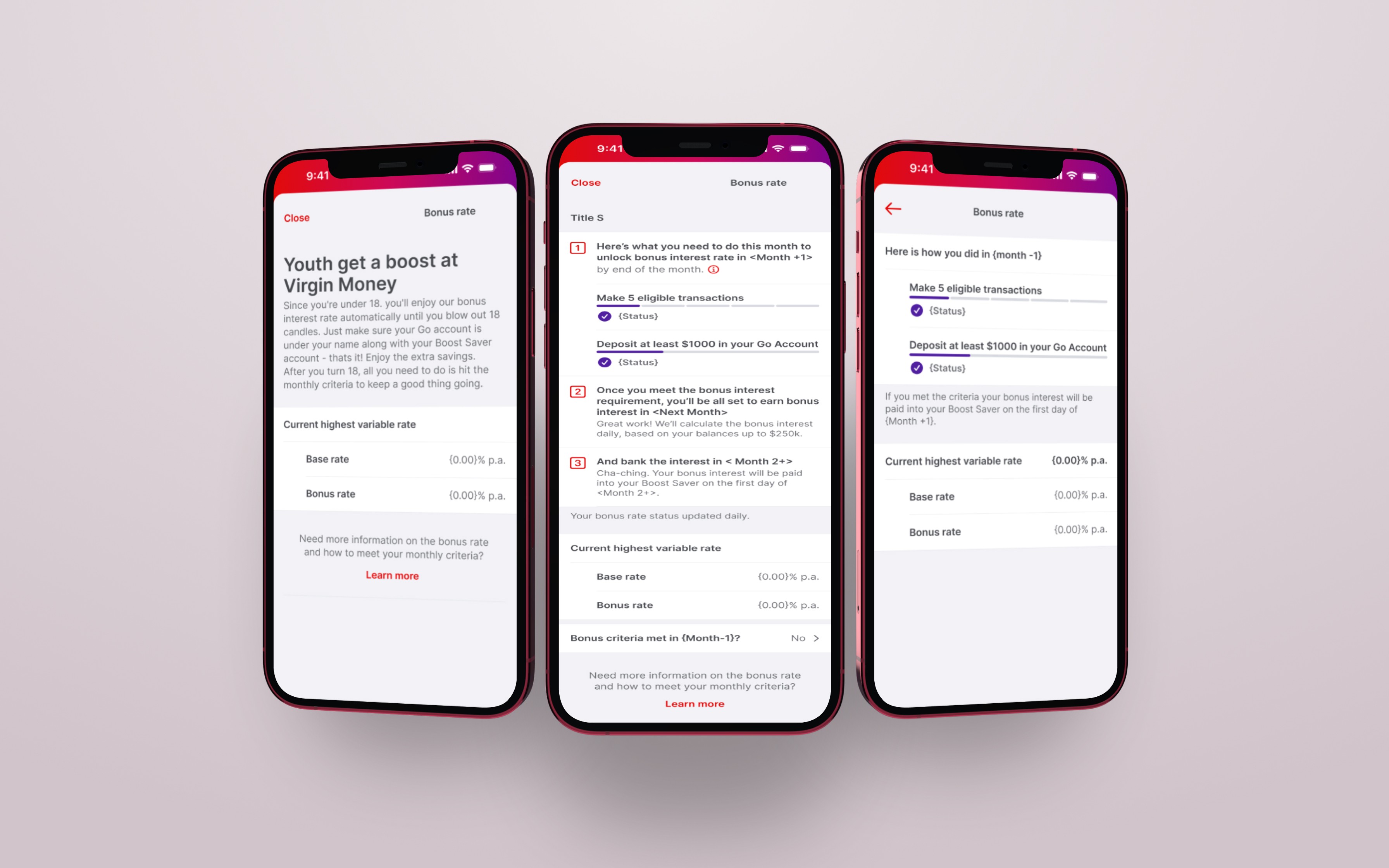
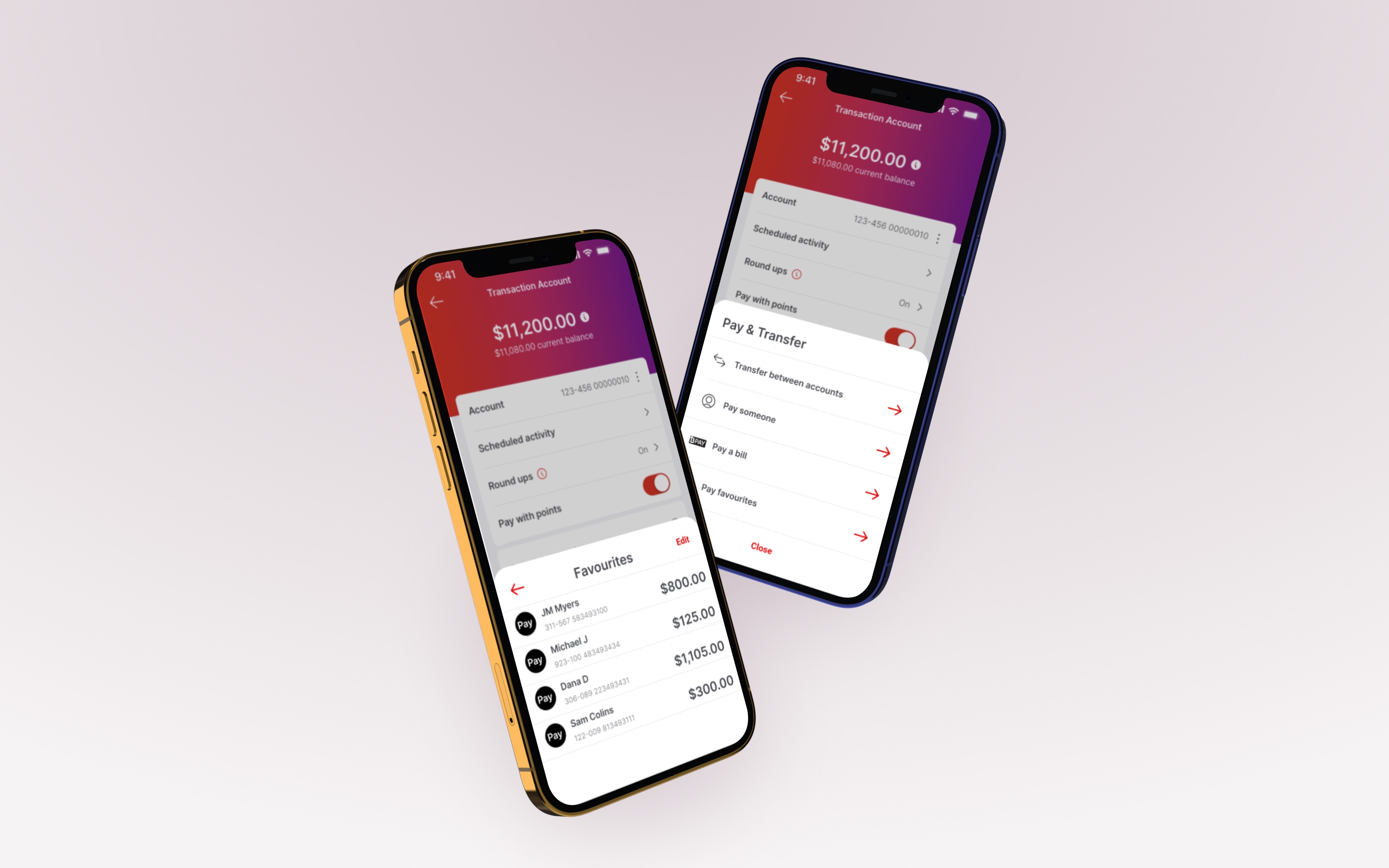
The MVP feature set was shaped directly by research findings. Here's how ME Bank Internet Banking launched.
/ Impact
Refined Personas & Mental Models
We moved away from age- and demographic-based personas, focusing instead on users’ task mindsets. Internet Banking users valued depth and detail; Mobile Banking users preferred speed and simplicity for quick wins like alerts.
Feature Expansion vs Feature Parity
We shifted from a rigid mobile-first approach to a context-first strategy. Desktop became the hub for heavy-lift tasks; mobile stayed lean for on-the-go needs. Each platform played to its strengths.
Successful Migration
Research-grounded design reduced contact centre dependency and gave users a migration experience that didn't erode trust which was the baseline goal for 215k customers.
/ Reflection
Reusable Research Templates
Post-project, I built standardised Dovetail templates and global tagging systems. These cut synthesis time and made cross-project collaboration seamless.
Upgraded Playback & Insights
I redesigned the playback format, adding a section for core user pain points and behaviour patterns. This made findings easier to action and improved design alignment across teams.
Deeper Stakeholder Alignment
We hosted inclusive workshops that invited candid feedback and collective decisions, which built trust and shifted how the organisation valued research input.
De-risking a 215k+ User Migration for 3 Digital Banks
The Problem: Three digital banks. A high-stakes migration. 215,042 legacy customers who needed to land somewhere better than where they started.
The Business Risk:Persona assumptions inherited from legacy internet banking didn't map to mobile-first behaviour. The MVP was being designed for users who didn't exist in the way the team imagined. Getting this wrong at migration scale — across 215k users — risked losing the trust of customers the business couldn't afford to lose.
My Role: Led concept testing with 12 participants across 3 brands. Research dismantled the age-based persona model. Behaviour was context-driven, not demographic-driven. Legacy customers weren't less capable. They were using Internet Banking for complex tasks that required depth and control mobile couldn't deliver.
The Outcome: Personas were redefined, feature priority shifted, the migration approach was reshaped around validated mobile-first behaviour patterns and 215,042 users migrated to a platform shaped by what they actually needed.
Client
Virgin Money | ME Bank | Bank of Queensland
Role
Lead Researcher | Service Designer
Stakeholders
Service Design Lead | Development Lead | Product Team
/ Context
3
brands, Mobile-first feature parity (untested assumption)
2
Legacy platforms overdue for retirement
33
%
Customers aged 66+, making accessibility non-negotiable
215K
+
Customers to migrate without losing trust or confidence
How might we replace outdated systems with a modern platform that scales across brands and feels seamless for every customer ?
/ Discovery
What We Wanted to Learn
Before a single screen was designed, we needed to validate the assumptions driving the MVP scope.
What features users expected and valued most on Internet Banking (IB) vs Mobile Banking (MB)
How brand-specific personas influenced those preferences
Whether the proposed flows were intuitive and aligned with user expectations
Where feature parity was essential, and where we could lean into platform strengths
As the Lead Researcher, I:
Planned and facilitated moderated concept testing with 12 participants across brands and demographics
Created recruitment screeners and prototypes tailored to test platform-specific expectations
Structured synthesis in Dovetail, ran a stakeholder playback to translate findings into product decisions, and updated brand personas based on what research actually revealed.
Collaborated with the service design team to inform persona refinement and MVP definition
Task-Centric Mental Models
Theme
Users preferred Internet Banking for complex, information-heavy tasks when depth and control mattered more than convenience.
Insight
Feature Expectations
Theme
Users wanted advanced tools on desktop—search, filters, personalisation—not just mobile parity.
Insight
Password-Less Login
Theme
Users favoured secure, seamless login over traditional passwords—accessibility and ease won.
Insight
Support Preferences
Theme
In-app chat beat call centres for quick help; calls were reserved for complex needs.
Insight
These insights dismantled the mobile-first parity assumption entirely. The strategy shifted to context-driven platform design. Each platform scoped for how users actually behaved, not what the team assumed they needed.
/ Design
The MVP feature set was shaped directly by research findings. Here's how ME Bank Internet Banking launched.
/ Impact
Refined Personas & Mental Models
We moved away from age- and demographic-based personas, focusing instead on users’ task mindsets. Internet Banking users valued depth and detail; Mobile Banking users preferred speed and simplicity for quick wins like alerts.
Feature Expansion vs Feature Parity
We shifted from a rigid mobile-first approach to a context-first strategy. Desktop became the hub for heavy-lift tasks; mobile stayed lean for on-the-go needs. Each platform played to its strengths.
Successful Migration
Research-grounded design reduced contact centre dependency and gave users a migration experience that didn't erode trust which was the baseline goal for 215k customers.
/ Reflection
Reusable Research Templates
Post-project, I built standardised Dovetail templates and global tagging systems. These cut synthesis time and made cross-project collaboration seamless.
Upgraded Playback & Insights
I redesigned the playback format, adding a section for core user pain points and behaviour patterns. This made findings easier to action and improved design alignment across teams.
Deeper Stakeholder Alignment
We hosted inclusive workshops that invited candid feedback and collective decisions, which built trust and shifted how the organisation valued research input.
De-risking a 215k+ User Migration for 3 Digital Banks
The Problem: Three digital banks. A high-stakes migration. 215,042 legacy customers who needed to land somewhere better than where they started.
The Business Risk:Persona assumptions inherited from legacy internet banking didn't map to mobile-first behaviour. The MVP was being designed for users who didn't exist in the way the team imagined. Getting this wrong at migration scale — across 215k users — risked losing the trust of customers the business couldn't afford to lose.
My Role: Led concept testing with 12 participants across 3 brands. Research dismantled the age-based persona model. Behaviour was context-driven, not demographic-driven. Legacy customers weren't less capable. They were using Internet Banking for complex tasks that required depth and control mobile couldn't deliver.
The Outcome: Personas were redefined, feature priority shifted, the migration approach was reshaped around validated mobile-first behaviour patterns and 215,042 users migrated to a platform shaped by what they actually needed.
Client
Virgin Money | ME Bank | Bank of Queensland
Role
Lead Researcher | Service Designer
Stakeholders
Service Design Lead | Development Lead | Product Team
/ Context
3
Complex Products, 3 Brands, 2 Platforms
2
Legacy platforms overdue for retirement
33
%
Customers aged 66+, making accessibility non-negotiable
215K
+
Customers to migrate without losing trust or confidence
How might we replace outdated systems with a modern platform that scales across brands and feels seamless for every customer ?
/ Discovery
What We Wanted to Learn
Before a single screen was designed, we needed to validate the assumptions driving the MVP scope.
What features users expected and valued most on Internet Banking (IB) vs Mobile Banking (MB)
How brand-specific personas influenced those preferences
Whether the proposed flows were intuitive and aligned with user expectations
Where feature parity was essential, and where we could lean into platform strengths
As the Lead Researcher, I:
Planned and facilitated moderated concept testing with 12 participants across brands and demographics
Created recruitment screeners and prototypes tailored to test platform-specific expectations
Structured synthesis in Dovetail, ran a stakeholder playback to translate findings into product decisions, and updated brand personas based on what research actually revealed.
Collaborated with the service design team to inform persona refinement and MVP definition
Task-Centric Mental Models
Theme
Users preferred Internet Banking for complex, information-heavy tasks when depth and control mattered more than convenience.
Insight
Feature Expectations
Theme
Users wanted advanced tools on desktop—search, filters, personalisation—not just mobile parity.
Insight
Password-Less Login
Theme
Users favoured secure, seamless login over traditional passwords—accessibility and ease won.
Insight
Support Preferences
Theme
In-app chat beat call centres for quick help; calls were reserved for complex needs.
Insight
These insights dismantled the mobile-first parity assumption entirely. The strategy shifted to context-driven platform design. Each platform scoped for how users actually behaved, not what the team assumed they needed.
/ Design
The MVP feature set was shaped directly by research findings. Here's how ME Bank Internet Banking launched.
/ Impact
Refined Personas & Mental Models
We moved away from age- and demographic-based personas, focusing instead on users’ task mindsets. Internet Banking users valued depth and detail; Mobile Banking users preferred speed and simplicity for quick wins like alerts.
Feature Expansion vs Feature Parity
We shifted from a rigid mobile-first approach to a context-first strategy. Desktop became the hub for heavy-lift tasks; mobile stayed lean for on-the-go needs. Each platform played to its strengths.
Successful Migration
Research-grounded design reduced contact centre dependency and gave users a migration experience that didn't erode trust which was the baseline goal for 215k customers.
/ Reflection
Reusable Research Templates
Post-project, I built standardised Dovetail templates and global tagging systems. These cut synthesis time and made cross-project collaboration seamless.
Upgraded Playback & Insights
I redesigned the playback format, adding a section for core user pain points and behaviour patterns. This made findings easier to action and improved design alignment across teams.
Deeper Stakeholder Alignment
We hosted inclusive workshops that invited candid feedback and collective decisions, which built trust and shifted how the organisation valued research input.