From Call Centre Load to Self-Serve Clarity: Bonus Interest Tracker
Role
UX Designer - Researcher
Scope
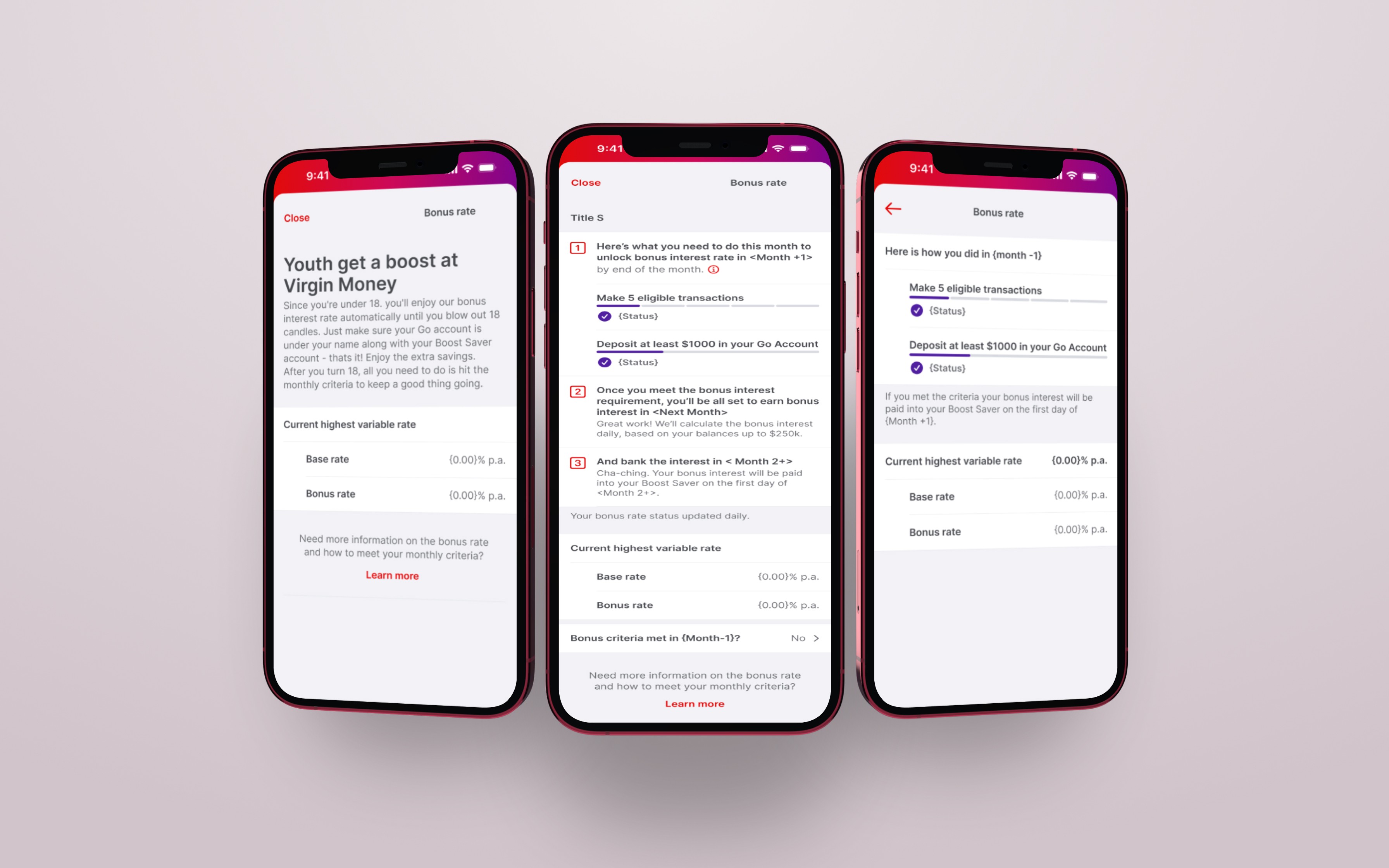
Led the end-to-end usability testing of the bonus tracker and the final design and delivery of the tracker across 5 products (including all edge cases), for 3 brands, for iOS and Android
Outcome
Designed a validated self-service bonus interest tracker to reduce call centre dependency. Clarified eligibility across all products and edge cases. Reframed remaining confusion as product complexity, handing the business a strategic decision alongside a design solution.
The Challenge
The call centre was overwhelmed by customers calling to ask about their bonus interest, whether they qualified, why they hadn't been paid, and what they needed to do differently. Each call required individual handling, drained call centre capacity, and drove down App Store ratings across all three brands.
I Pushed for
Transparency over hand-holding and product simplification. I advocated for giving customers the visibility to track their own progress. The hypothesis was that if people could see where they stood — eligibility, timeline, and criteria — they wouldn't need to call. I led end-to-end usability testing and synthesis across 3 brands to validate this before committing to a direction.
Client
Virgin Money | ME Bank | Bank of Queensland
Stakeholders
Product Lead | Development Lead | Design Lead | Compliance Team
/ Context
How might we help customers stay on track to earn their bonus, without needing to call for help?
/ Discovery
Experience Mapping
We mapped the product criteria and user journey to identify friction points in tracking bonus interest. By analysing app interactions, call centre logs, and user feedback, we uncovered transparency gaps that led to confusion and high support demand. These insights shaped our design hypothesis.
Customers find Bonus Interest criteria difficult to understand.
Pain Point
We believe clear communication of the criteria and progress visibility will reduce support queries, because customers had no way to self-serve the answer.
Hypothesis
Customers don’t know which criteria they haven’t met.
Pain Point
We believe a visual progress tracker will increase completion rates, because users can't act on criteria they can't see.
Hypothesis
Customers don’t understand why pending transactions are excluded.
Pain Point
We believe contextual messaging around pending transactions will reduce confusion, because without explanation exclusions felt like errors.
Hypothesis
Customers lack timely updates on their progress.
Pain Point
We believe timely progress updates will improve confidence and completion, because they can't complete what they don't know they have missed.
Hypothesis
Competitor Analysis
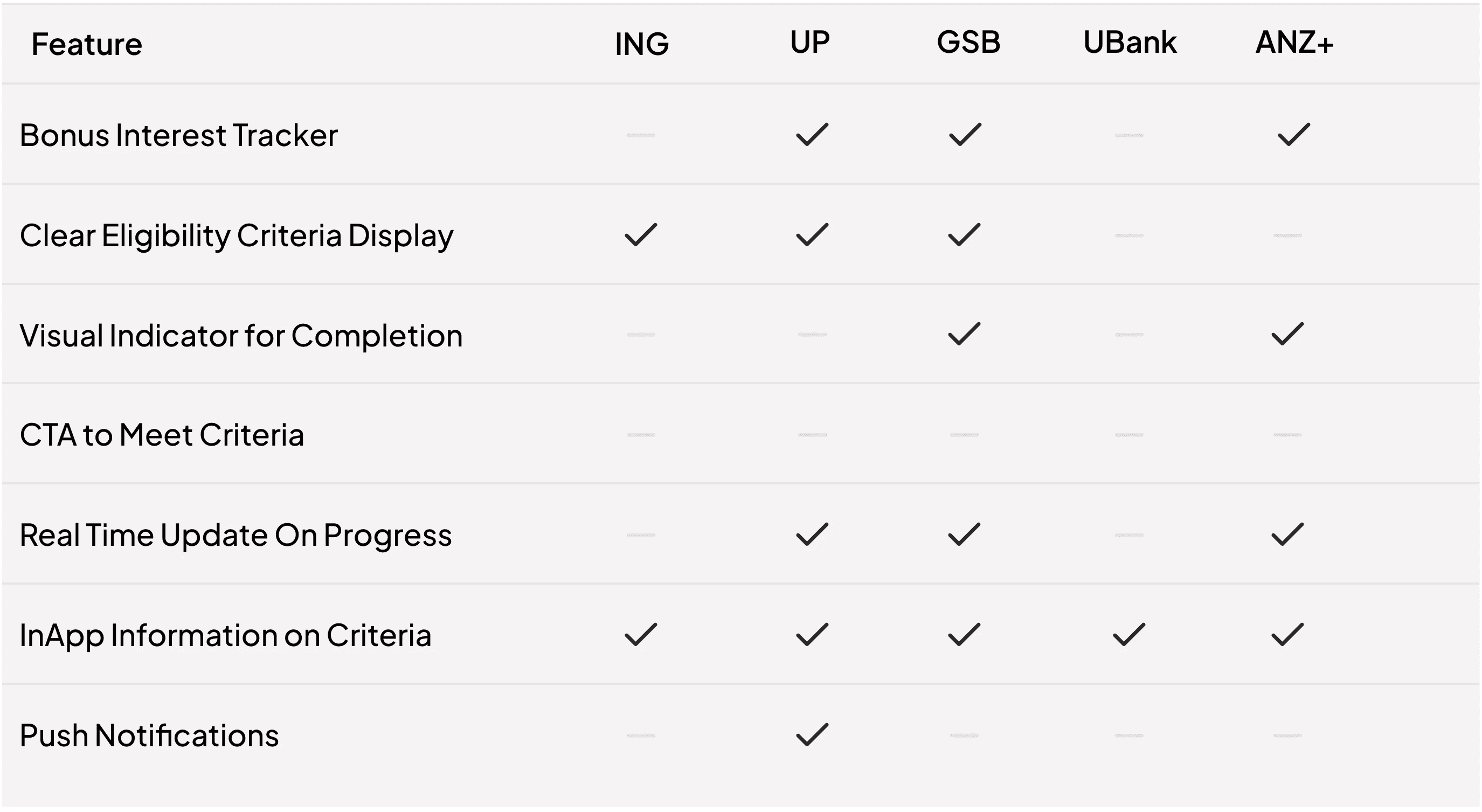
We audited 5 competitor banking apps to benchmark how the market handled bonus interest visibility. The gap was clear: most competitors either lacked a tracker entirely or buried eligibility criteria. That absence validated the opportunity, and the table below shows exactly where the market fell short.
Prototyping
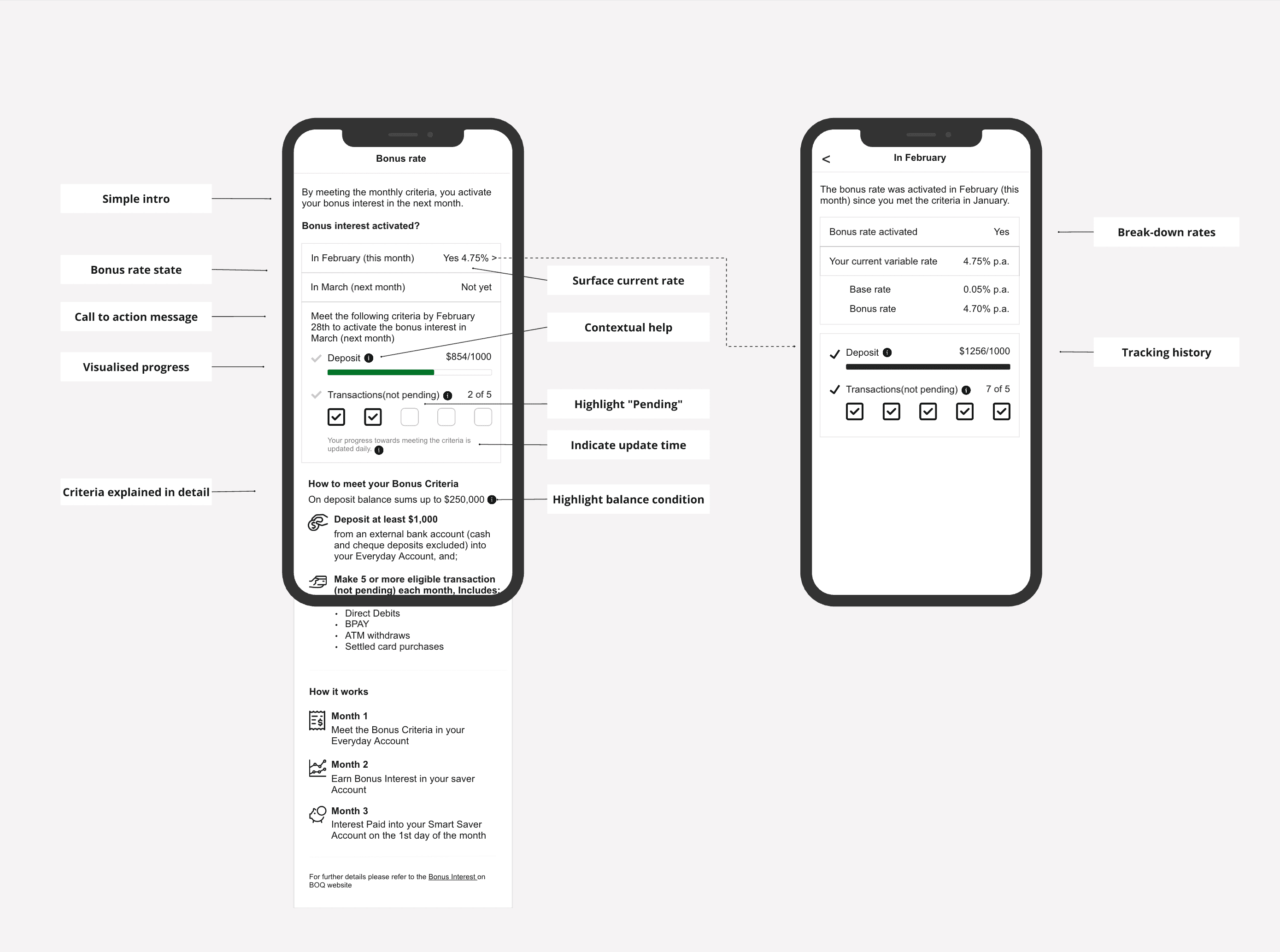
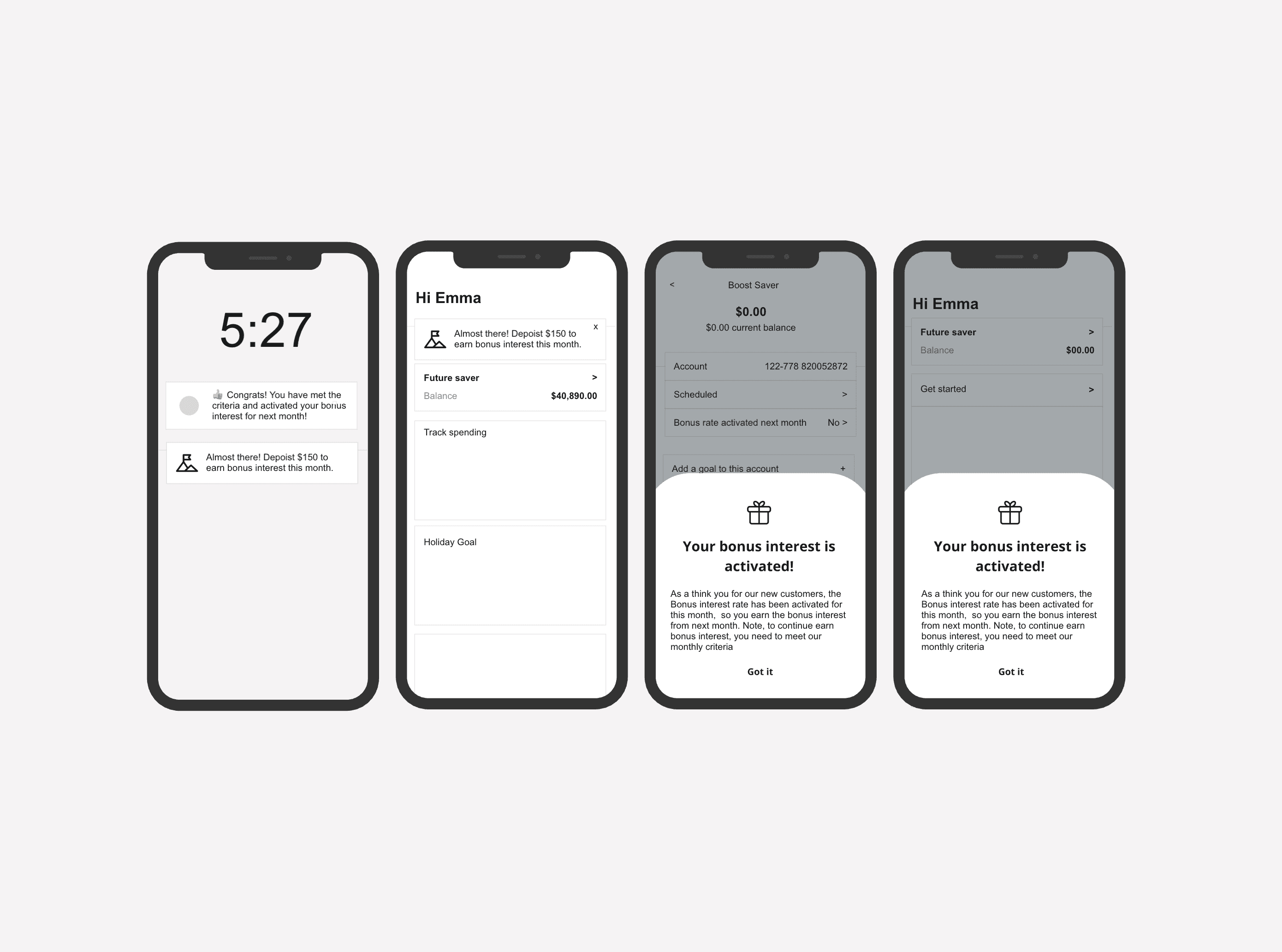
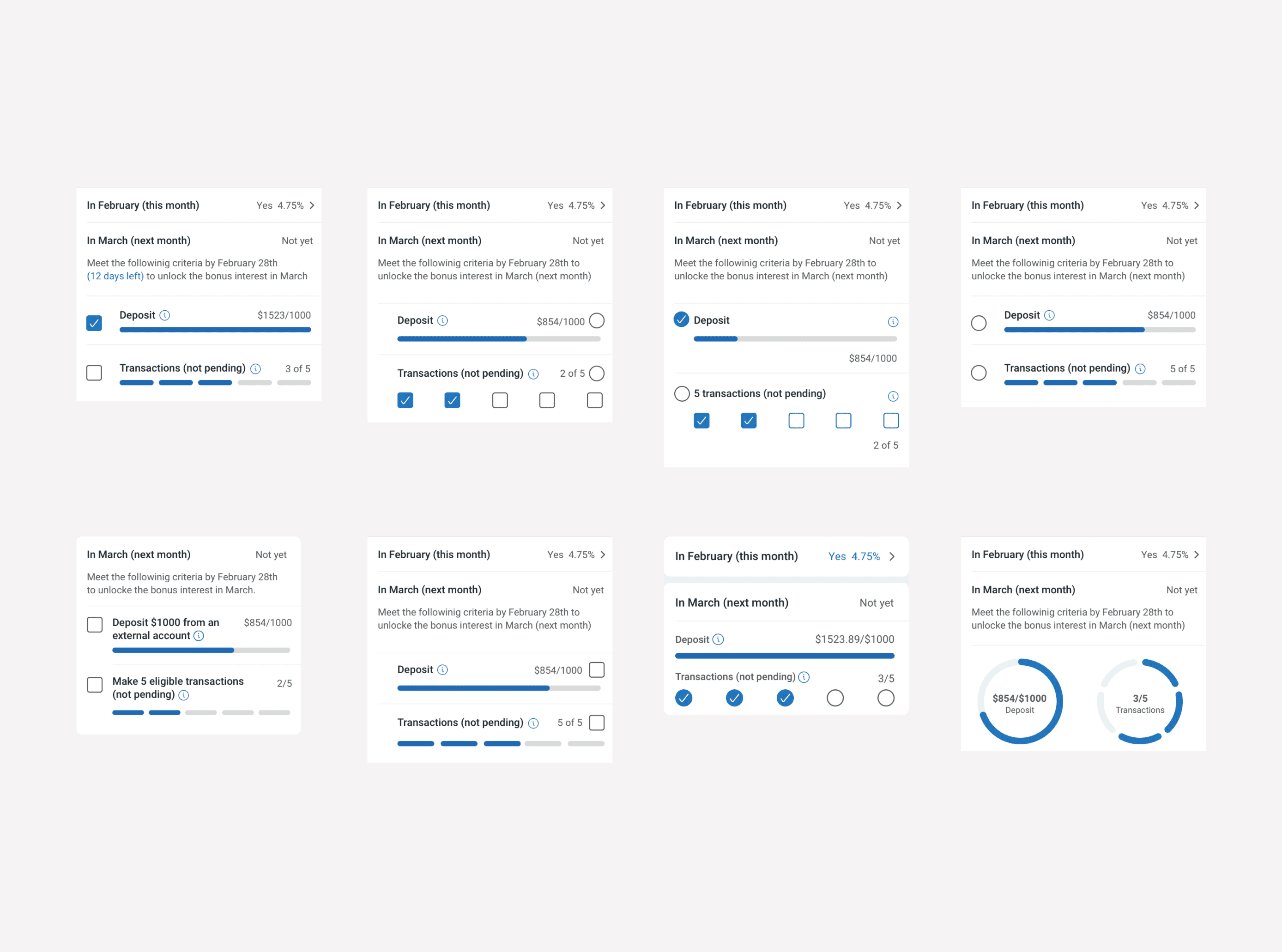
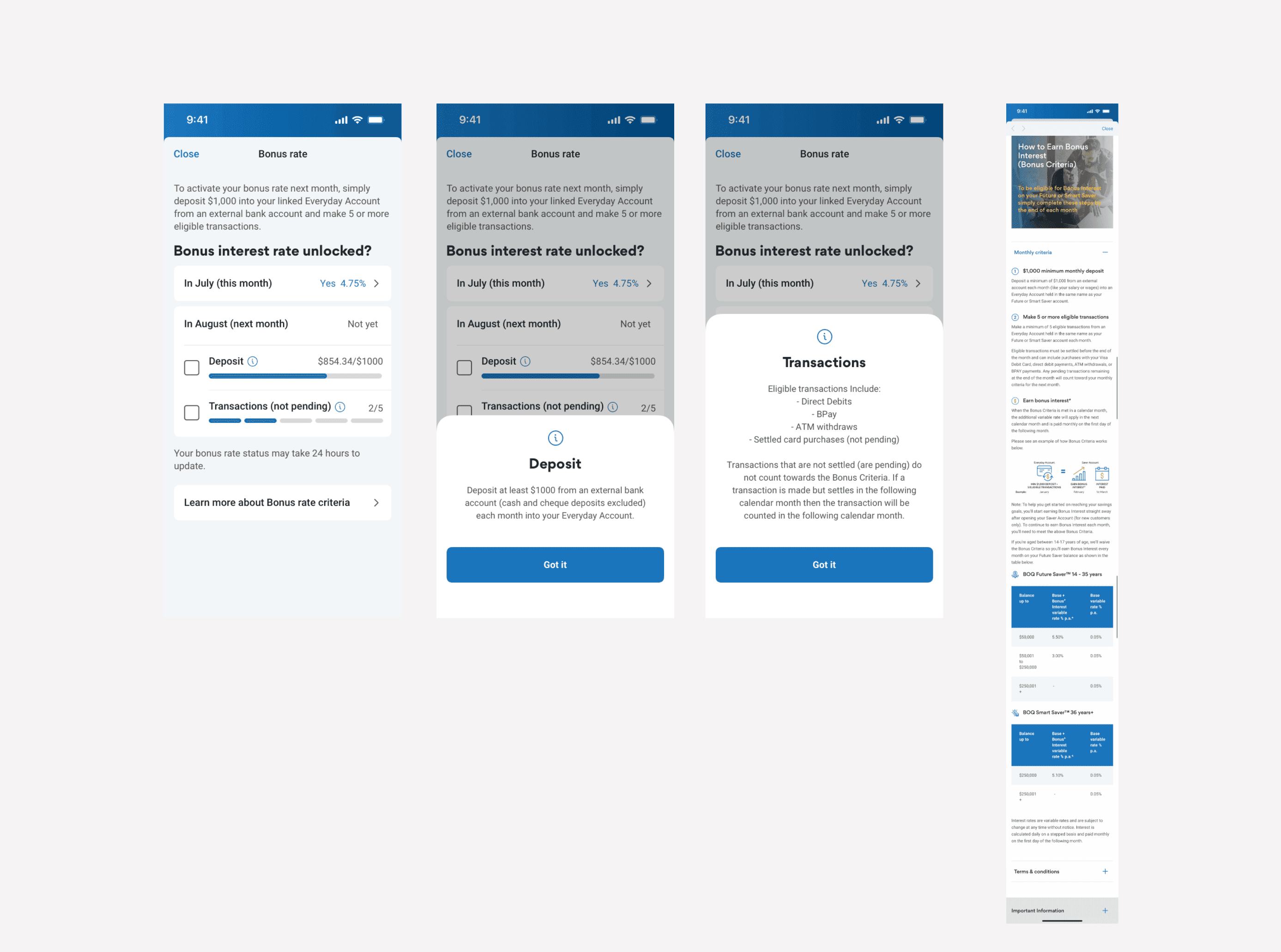
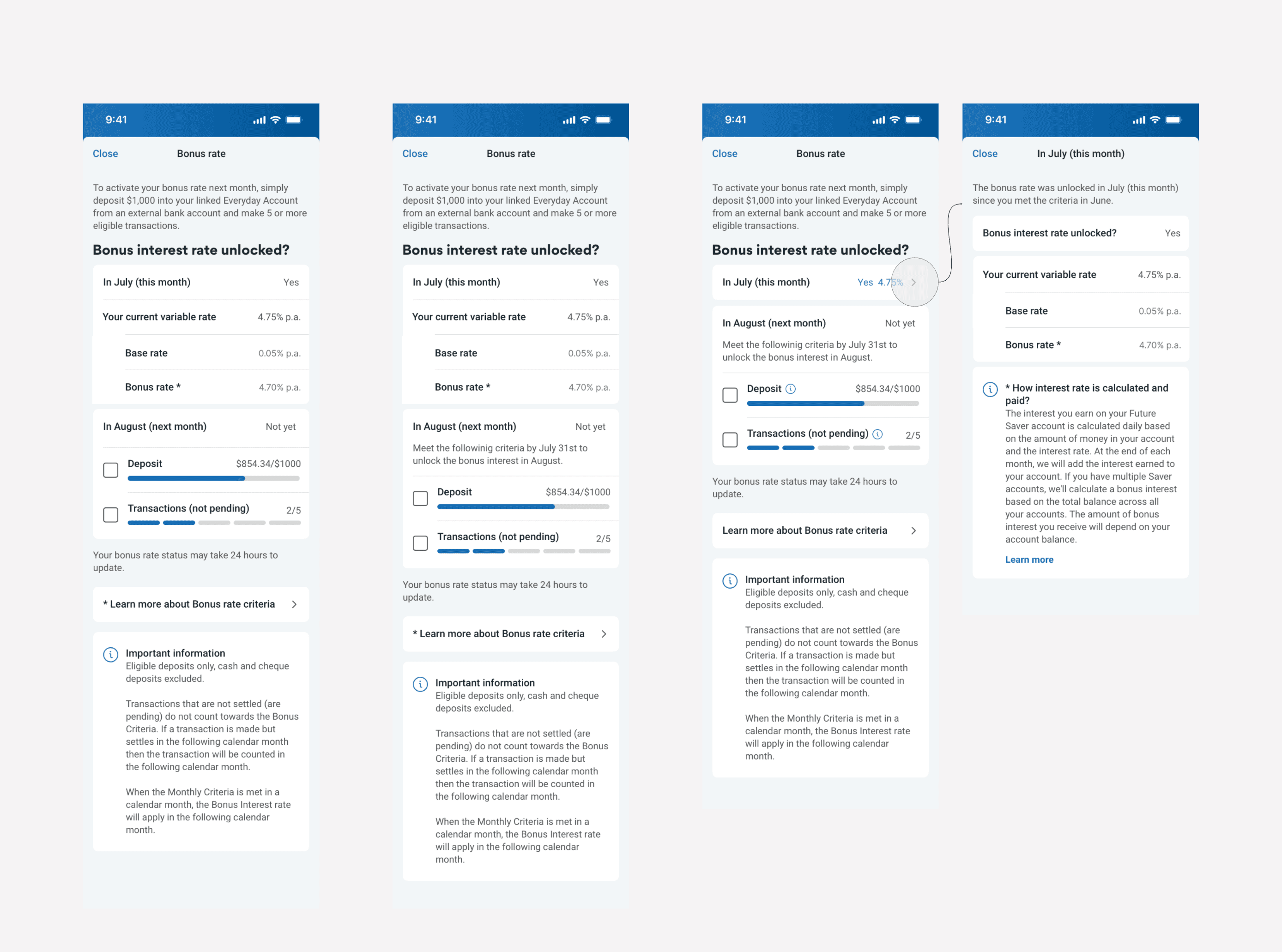
We then designed a series of prototypes in preparation for usability testing.
Usability Testing
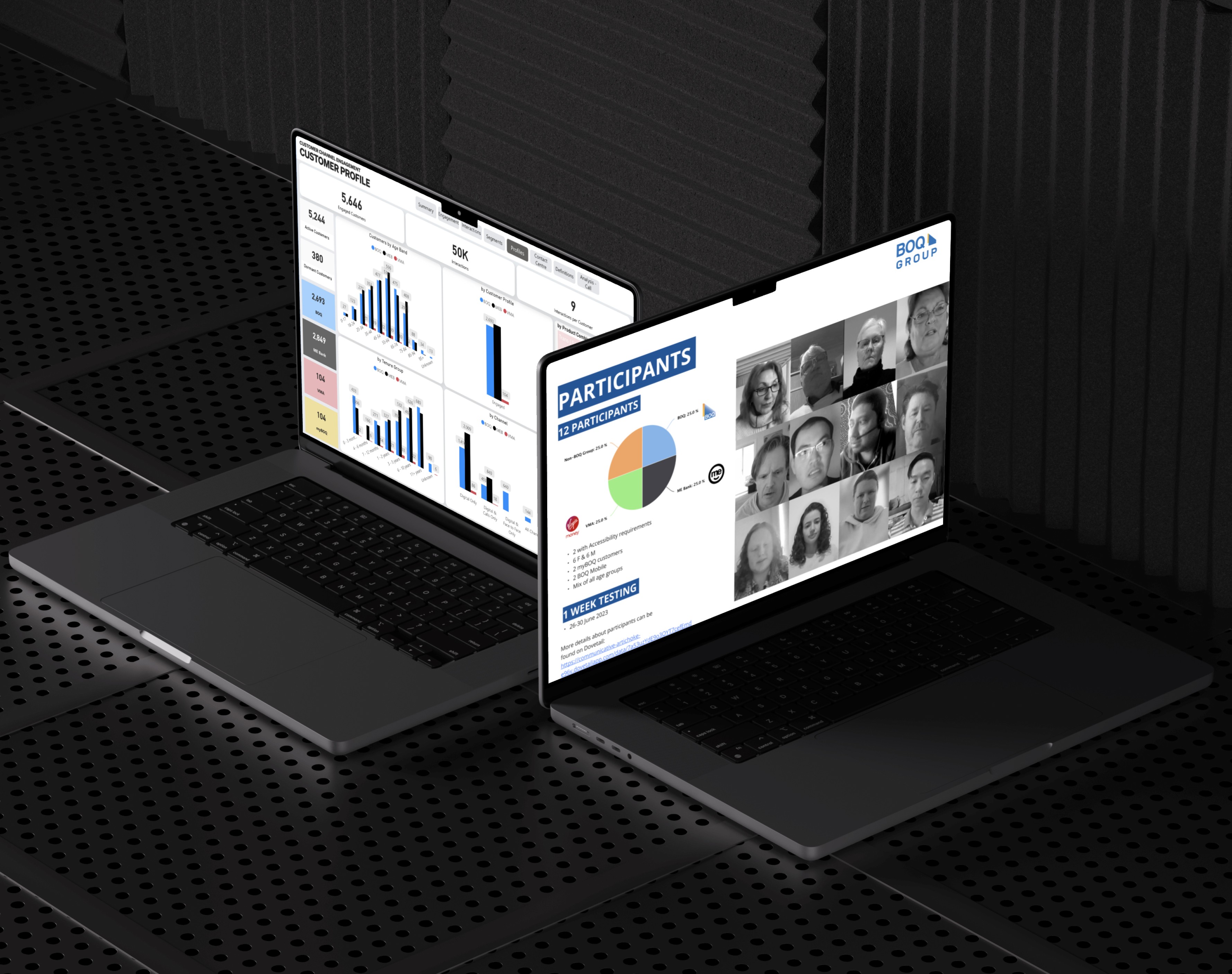
I recruited and led 6 moderated sessions across 8 prototype variations. Users valued the visual tracker and understood each element in isolation, but couldn't connect the criteria, timeline, and tracker into a coherent picture. The hierarchy wasn't guiding them through the information gradually. That insight shifted the iteration priority from visual refinement to information architecture.
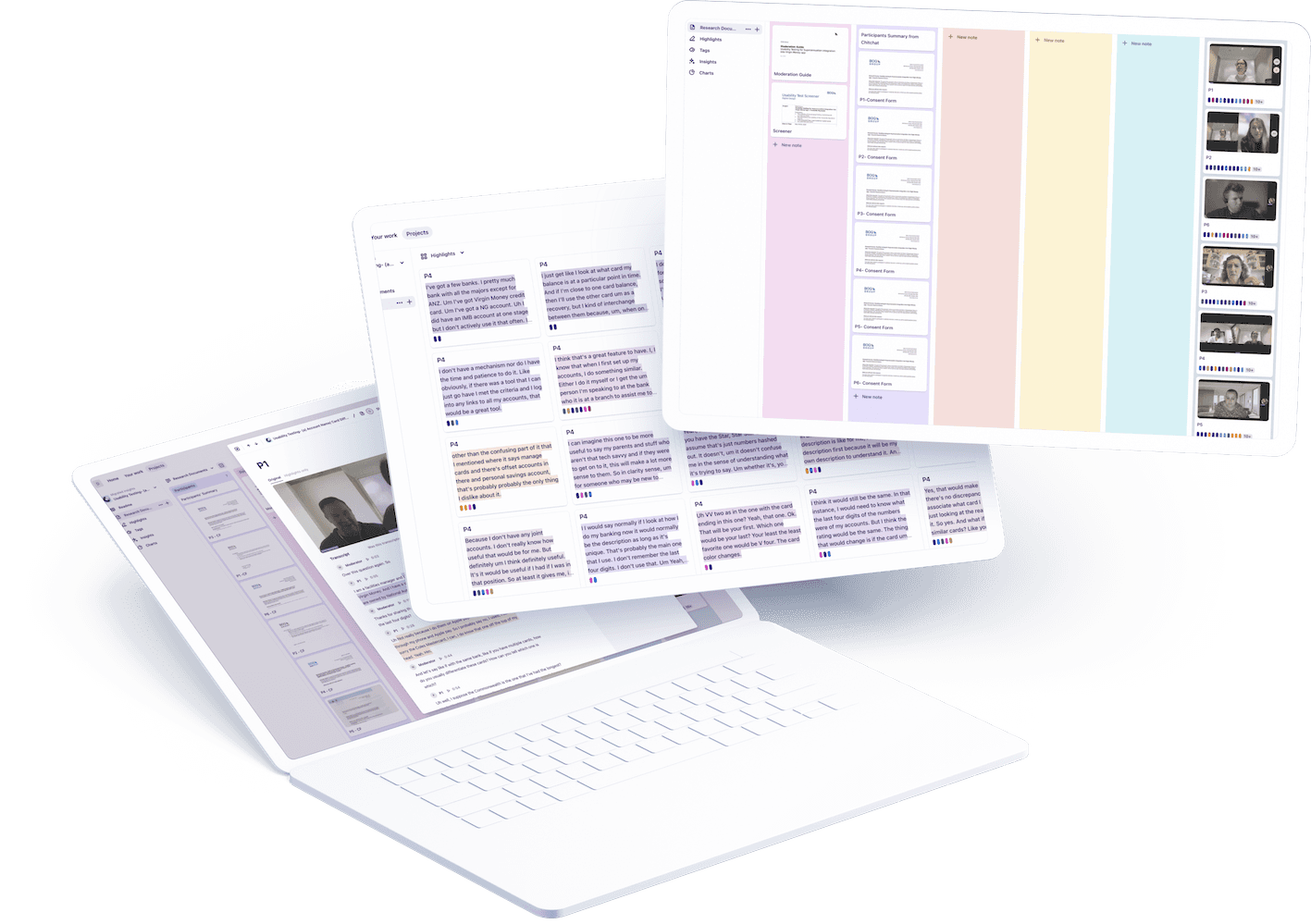
Users loved the visual tracker, but struggled to piece together fragmented copy, navigate the cluttered layout, and follow unclear instructions.
/ Design
Redesigned for clarity, usability, and actionability
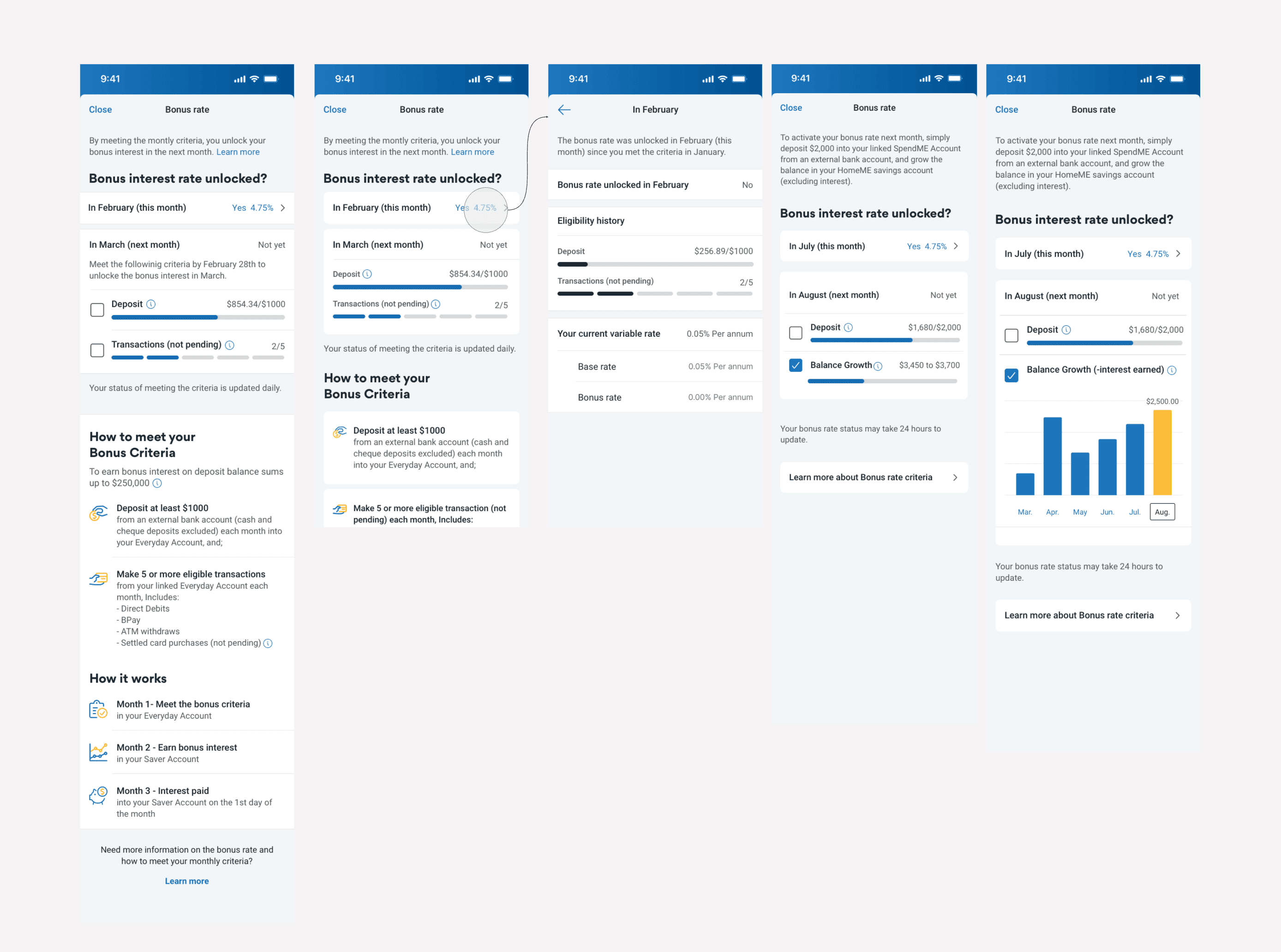
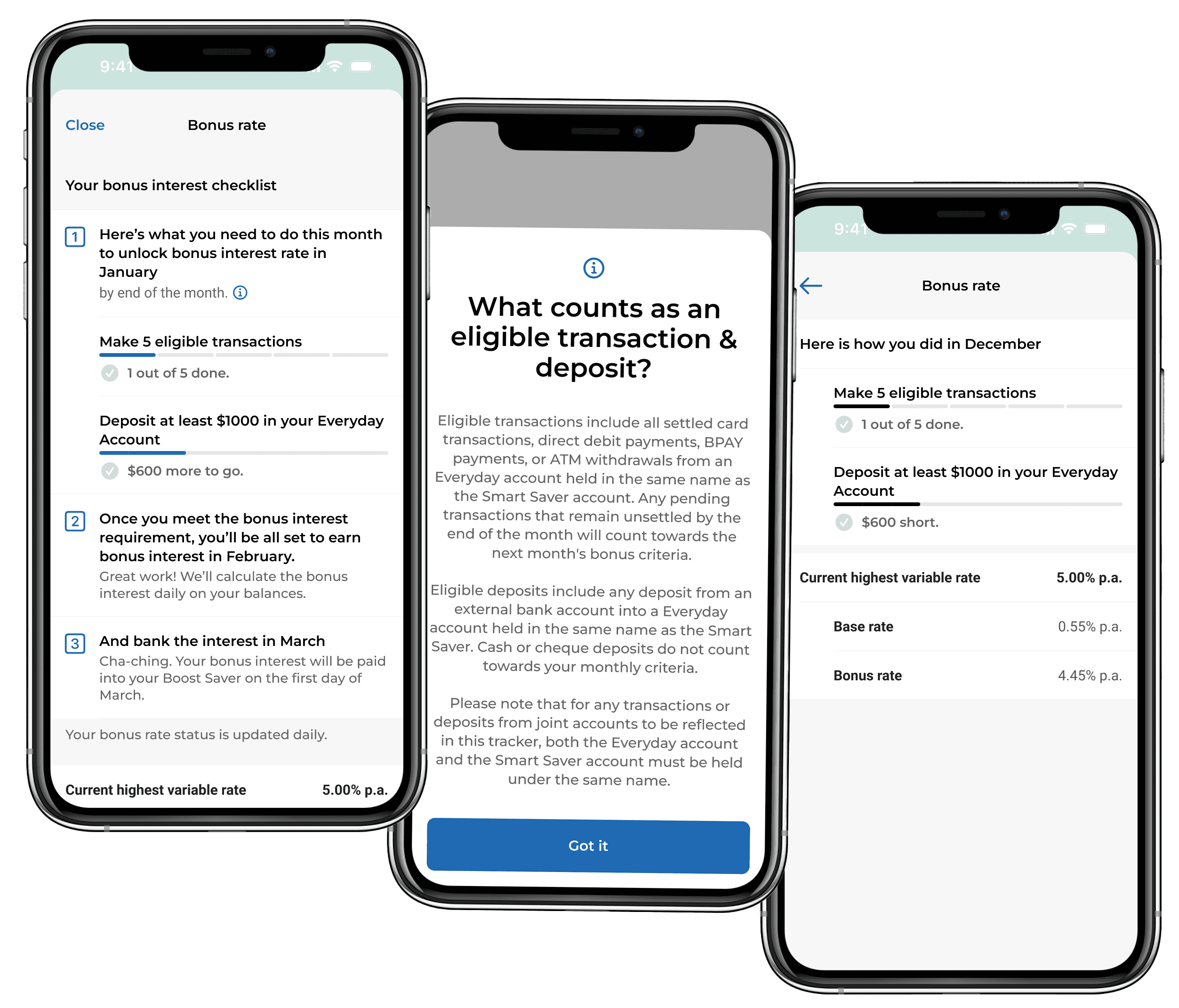
I led and executed each design iteration based on a specific research finding. The priority was information hierarchy first, making the criteria, timeline, and tracker readable as a connected system before refining the visual layer.
Hover over the arrows to explore key improvements.
Edge Cases
Not all users fit the standard flow. I designed for welcome bonus recipients and under-18 accounts among other edge cases that would have created confusion or exclusion if left unaddressed.
Design Hand-off
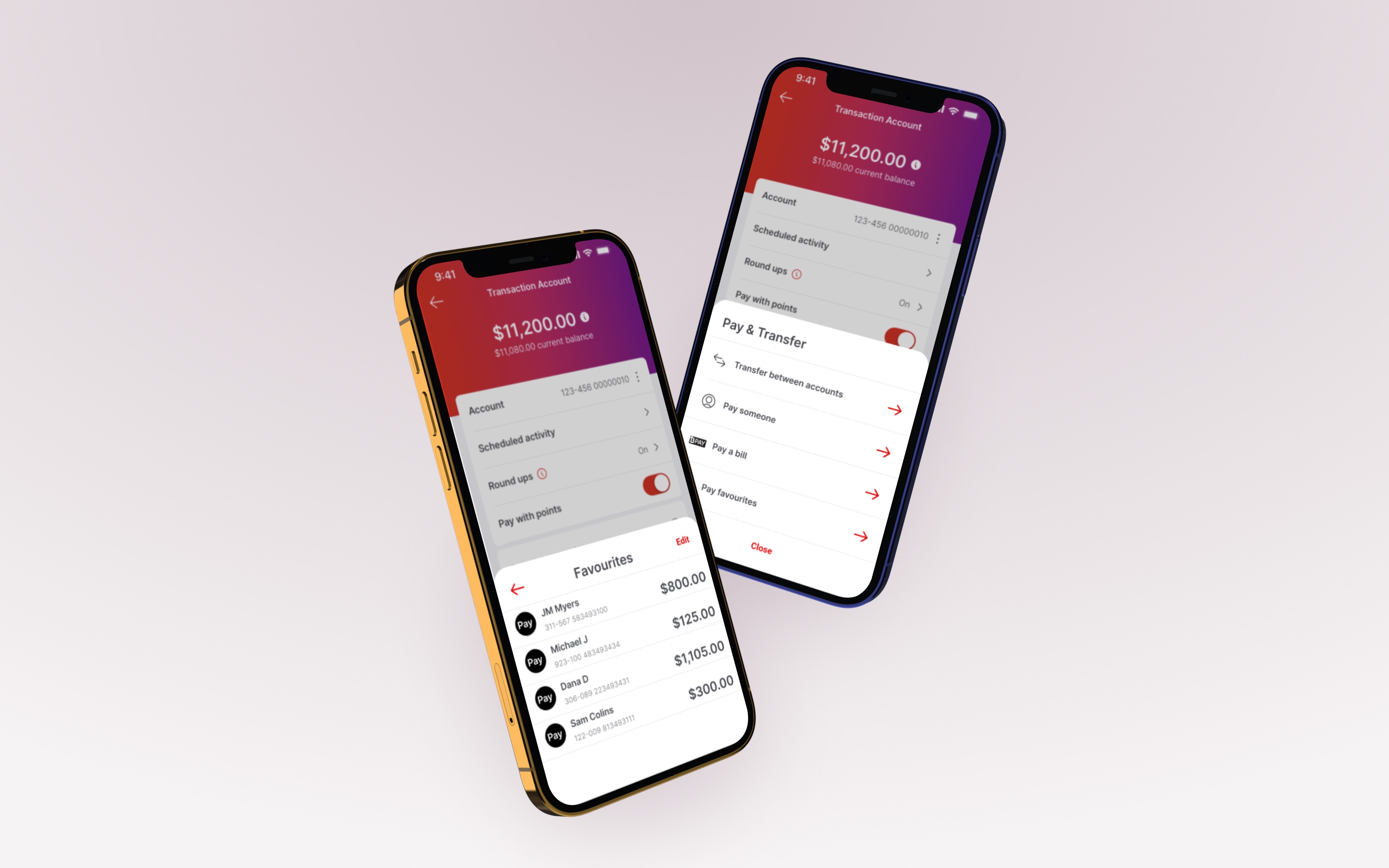
I worked directly with the senior UI designer to adapt the tracker across three brand design systems, and aligned with developers early to surface feasibility constraints before final handover, not after.
Before
After
/ What Changed
If confusion persisted post-launch, the next lever was product simplification, not more design.
/ Reflection
The hardest problem here wasn't the interface, it was the product logic underneath it. Aligning compliance, dev, product, and branding around a solution required documentation, clear communication, and the ability to hold steady under competing priorities, especially when internal stakeholders didn't fully agree on how the product worked. The result was two outcomes delivered from one piece of work: a design solution for what could be solved, and evidence handed to the business for what couldn't. Knowing the difference, and being able to articulate it to stakeholders, is what made this more than a design project.
From Call Centre Load to Self-Serve Clarity: Bonus Interest Tracker
Role
UX Designer - Researcher
Scope
Led the end-to-end usability testing of the bonus tracker and the final design and delivery of the tracker across 5 products (including all edge cases), for 3 brands, for iOS and Android
Outcome
Designed a validated self-service bonus interest tracker to reduce call centre dependency. Clarified eligibility across all products and edge cases. Reframed remaining confusion as product complexity, handing the business a strategic decision alongside a design solution.
The Challenge
The call centre was overwhelmed by customers calling to ask about their bonus interest, whether they qualified, why they hadn't been paid, and what they needed to do differently. Each call required individual handling, drained call centre capacity, and drove down App Store ratings across all three brands.
I Pushed for
Transparency over hand-holding and product simplification. I advocated for giving customers the visibility to track their own progress. The hypothesis was that if people could see where they stood — eligibility, timeline, and criteria — they wouldn't need to call. I led end-to-end usability testing and synthesis across 3 brands to validate this before committing to a direction.
Client
Virgin Money | ME Bank | Bank of Queensland
Stakeholders
Product Lead | Development Lead | Design Lead | Compliance Team
/ Context
How might we help customers stay on track to earn their bonus, without needing to call for help?
/ Discovery
Experience Mapping
We mapped the product criteria and user journey to identify friction points in tracking bonus interest. By analysing app interactions, call centre logs, and user feedback, we uncovered transparency gaps that led to confusion and high support demand. These insights shaped our design hypothesis.
Customers find Bonus Interest criteria difficult to understand.
Pain Point
We believe clear communication of the criteria and progress visibility will reduce support queries, because customers had no way to self-serve the answer.
Hypothesis
Customers don’t know which criteria they haven’t met.
Pain Point
We believe a visual progress tracker will increase completion rates, because users can't act on criteria they can't see.
Hypothesis
Customers don’t understand why pending transactions are excluded.
Pain Point
We believe contextual messaging around pending transactions will reduce confusion, because without explanation exclusions felt like errors.
Hypothesis
Customers lack timely updates on their progress.
Pain Point
We believe timely progress updates will improve confidence and completion, because they can't complete what they don't know they have missed.
Hypothesis
Competitor Analysis
We audited 5 competitor banking apps to benchmark how the market handled bonus interest visibility. The gap was clear: most competitors either lacked a tracker entirely or buried eligibility criteria. That absence validated the opportunity, and the table below shows exactly where the market fell short.
Prototyping
We then designed a series of prototypes in preparation for usability testing.
Usability Testing
I recruited and led 6 moderated sessions across 8 prototype variations. Users valued the visual tracker and understood each element in isolation, but couldn't connect the criteria, timeline, and tracker into a coherent picture. The hierarchy wasn't guiding them through the information gradually. That insight shifted the iteration priority from visual refinement to information architecture.
Users loved the visual tracker, but struggled to piece together fragmented copy, navigate the cluttered layout, and follow unclear instructions.
/ Design
Redesigned for clarity, usability, and actionability
I led and executed each design iteration based on a specific research finding. The priority was information hierarchy first, making the criteria, timeline, and tracker readable as a connected system before refining the visual layer.
Hover over the arrows to explore key improvements.
Edge Cases
Not all users fit the standard flow. I designed for welcome bonus recipients and under-18 accounts among other edge cases that would have created confusion or exclusion if left unaddressed.
Design Hand-off
I worked directly with the senior UI designer to adapt the tracker across three brand design systems, and aligned with developers early to surface feasibility constraints before final handover, not after.
Before
After
/ What Changed
If confusion persisted post-launch, the next lever was product simplification, not more design.
/ Reflection
The hardest problem here wasn't the interface, it was the product logic underneath it. Aligning compliance, dev, product, and branding around a solution required documentation, clear communication, and the ability to hold steady under competing priorities, especially when internal stakeholders didn't fully agree on how the product worked. The result was two outcomes delivered from one piece of work: a design solution for what could be solved, and evidence handed to the business for what couldn't. Knowing the difference, and being able to articulate it to stakeholders, is what made this more than a design project.
From Call Centre Load to Self-Serve Clarity: Bonus Interest Tracker
Role
UX Designer - Researcher
Scope
Led the end-to-end usability testing of the bonus tracker and the final design and delivery of the tracker across 5 products (including all edge cases), for 3 brands, for iOS and Android
Outcome
Designed a validated self-service bonus interest tracker to reduce call centre dependency. Clarified eligibility across all products and edge cases. Reframed remaining confusion as product complexity, handing the business a strategic decision alongside a design solution.
The Challenge
The call centre was overwhelmed by customers calling to ask about their bonus interest, whether they qualified, why they hadn't been paid, and what they needed to do differently. Each call required individual handling, drained call centre capacity, and drove down App Store ratings across all three brands.
I Pushed for
Transparency over hand-holding and product simplification. I advocated for giving customers the visibility to track their own progress. The hypothesis was that if people could see where they stood — eligibility, timeline, and criteria — they wouldn't need to call. I led end-to-end usability testing and synthesis across 3 brands to validate this before committing to a direction.
Client
Virgin Money | ME Bank | Bank of Queensland
Stakeholders
Product Lead | Development Lead | Design Lead | Compliance Team
/ Context
How might we help customers stay on track to earn their bonus, without needing to call for help?
/ Discovery
Experience Mapping
We mapped the product criteria and user journey to identify friction points in tracking bonus interest. By analysing app interactions, call centre logs, and user feedback, we uncovered transparency gaps that led to confusion and high support demand. These insights shaped our design hypothesis.
Customers find Bonus Interest criteria difficult to understand.
Pain Point
We believe clear communication of the criteria and progress visibility will reduce support queries, because customers had no way to self-serve the answer.
Hypothesis
Customers don’t know which criteria they haven’t met.
Pain Point
We believe a visual progress tracker will increase completion rates, because users can't act on criteria they can't see.
Hypothesis
Customers don’t understand why pending transactions are excluded.
Pain Point
We believe contextual messaging around pending transactions will reduce confusion, because without explanation exclusions felt like errors.
Hypothesis
Customers lack timely updates on their progress.
Pain Point
We believe timely progress updates will improve confidence and completion, because they can't complete what they don't know they have missed.
Hypothesis
Competitor Analysis
We audited 5 competitor banking apps to benchmark how the market handled bonus interest visibility. The gap was clear: most competitors either lacked a tracker entirely or buried eligibility criteria. That absence validated the opportunity, and the table below shows exactly where the market fell short.
Prototyping
We then designed a series of prototypes in preparation for usability testing.
Usability Testing
I recruited and led 6 moderated sessions across 8 prototype variations. Users valued the visual tracker and understood each element in isolation, but couldn't connect the criteria, timeline, and tracker into a coherent picture. The hierarchy wasn't guiding them through the information gradually. That insight shifted the iteration priority from visual refinement to information architecture.
Users loved the visual tracker, but struggled to piece together fragmented copy, navigate the cluttered layout, and follow unclear instructions.
/ Design
Redesigned for clarity, usability, and actionability
I led and executed each design iteration based on a specific research finding. The priority was information hierarchy first, making the criteria, timeline, and tracker readable as a connected system before refining the visual layer.
Hover over the arrows to explore key improvements.
Edge Cases
Not all users fit the standard flow. I designed for welcome bonus recipients and under-18 accounts among other edge cases that would have created confusion or exclusion if left unaddressed.
Design Hand-off
I worked directly with the senior UI designer to adapt the tracker across three brand design systems, and aligned with developers early to surface feasibility constraints before final handover, not after.
Before
After
/ What Changed
If confusion persisted post-launch, the next lever was product simplification, not more design.
/ Reflection
The hardest problem here wasn't the interface, it was the product logic underneath it. Aligning compliance, dev, product, and branding around a solution required documentation, clear communication, and the ability to hold steady under competing priorities, especially when internal stakeholders didn't fully agree on how the product worked. The result was two outcomes delivered from one piece of work: a design solution for what could be solved, and evidence handed to the business for what couldn't. Knowing the difference, and being able to articulate it to stakeholders, is what made this more than a design project.