De-risking a 215k+ User Migration for 3 Digital Banks
The Problem: Three digital banks. A high-stakes migration. 215,042 legacy customers who needed to land somewhere better than where they started.
The Business Risk:Persona assumptions inherited from legacy internet banking didn't map to mobile-first behaviour. The MVP was being designed for users who didn't exist in the way the team imagined. Getting this wrong at migration scale — across 215k users — risked losing the trust of customers the business couldn't afford to lose.
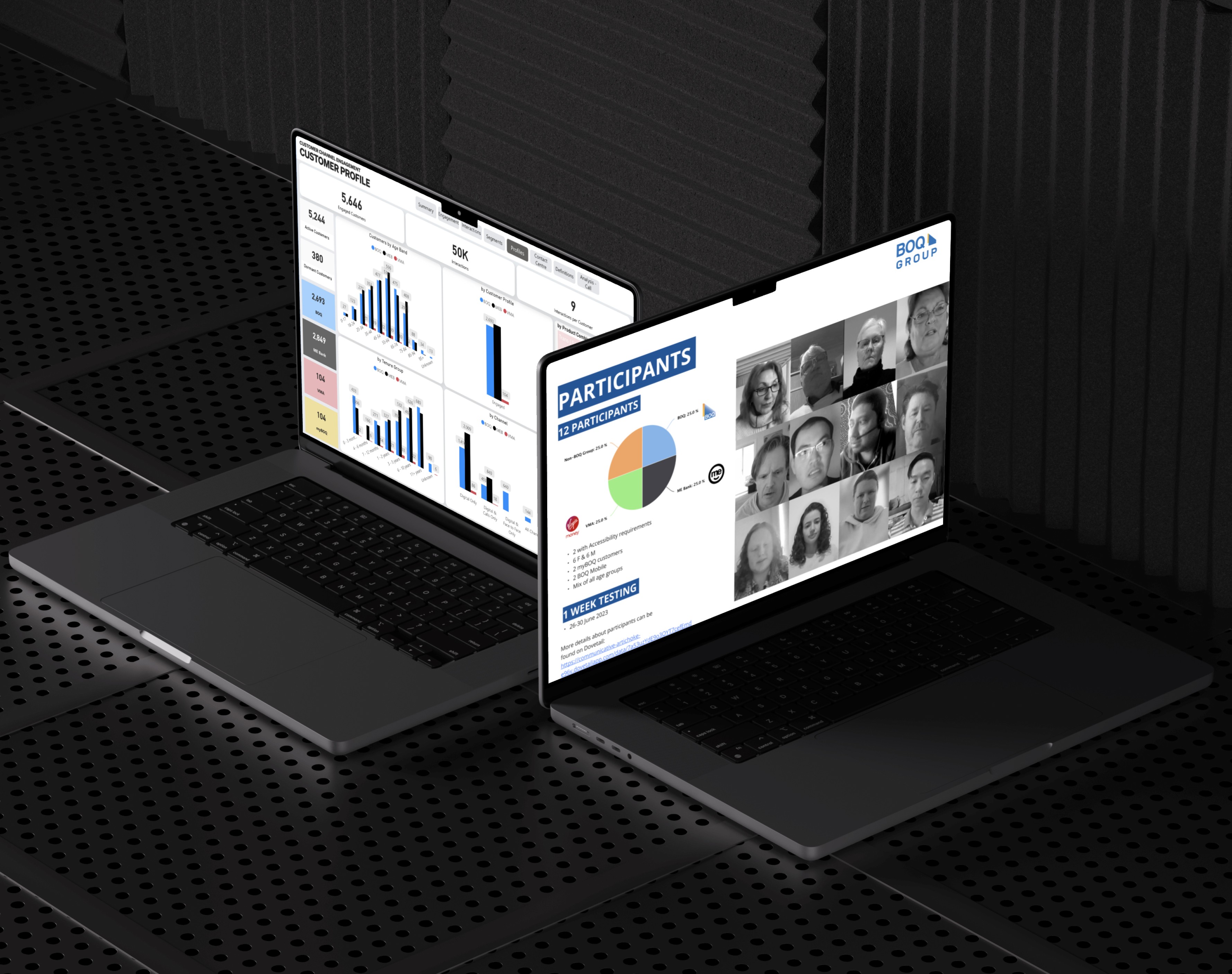
My Role: Led concept testing with 12 participants across 3 brands. Research dismantled the age-based persona model. Behaviour was context-driven, not demographic-driven. Legacy customers weren't less capable. They were using Internet Banking for complex tasks that required depth and control mobile couldn't deliver.
The Outcome: Personas were redefined, feature priority shifted, the migration approach was reshaped around validated mobile-first behaviour patterns and 215,042 users migrated to a platform shaped by what they actually needed.
Client
Virgin Money | ME Bank | Bank of Queensland
Role
Lead Researcher | Service Designer
Stakeholders
Service Design Lead | Development Lead | Product Team
/ Context
5
Complex Products, 3 Brands, 2 Platforms
10
%
Of Digital Bank Complaints Were Related to Bonus Interest
30
%
Of These Complaints Were from Virgin Money
70
%
Of These Complaints Were from MyBOQ App
How might we replace outdated systems with a modern platform that scales across brands and feels seamless for every customer — new or legacy?
These insights dismantled the mobile-first parity assumption entirely. The strategy shifted to context-driven platform design. Each platform scoped for how users actually behaved, not what the team assumed they needed.
/ Design
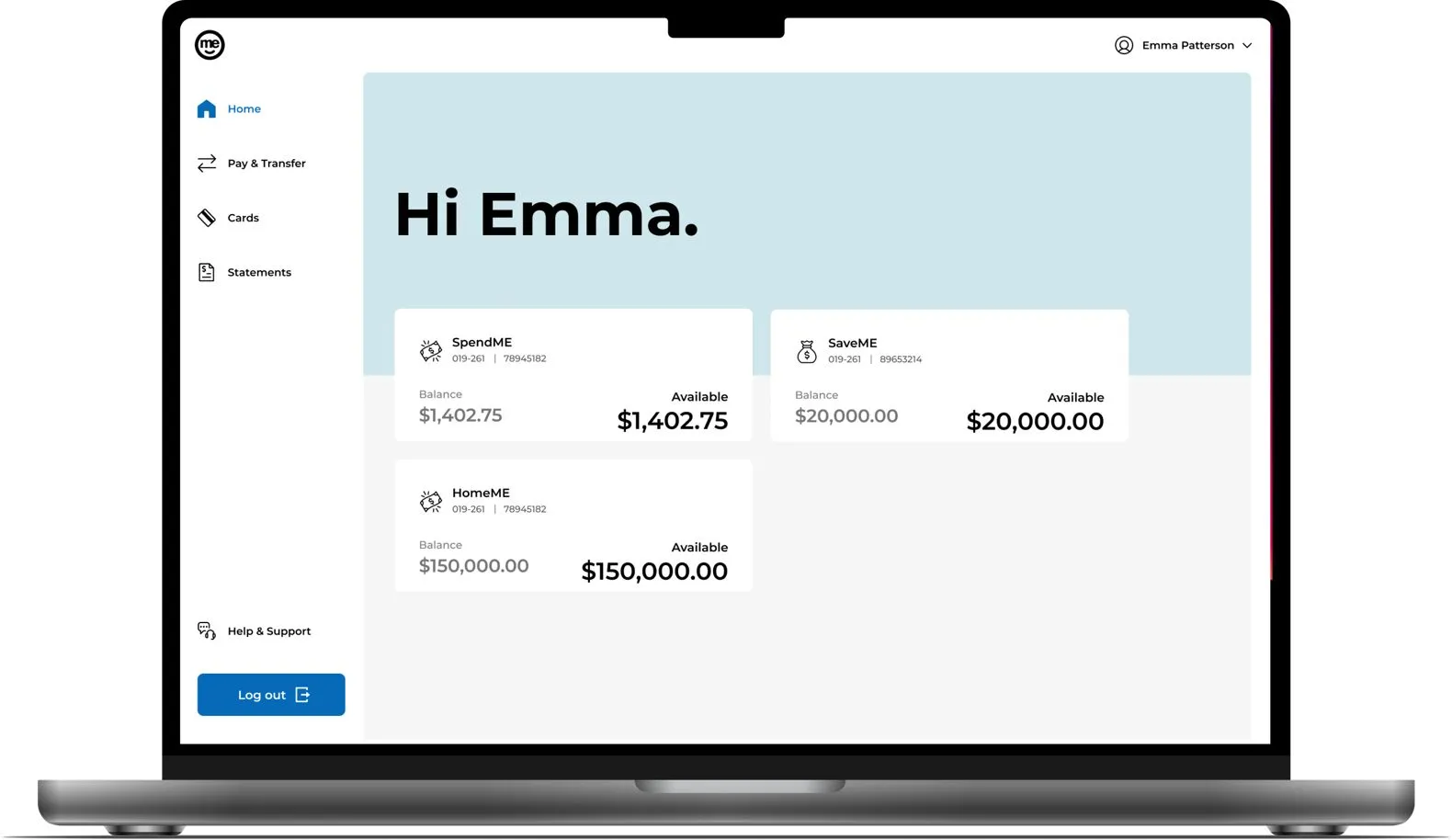
The MVP feature set was shaped directly by research findings. Here's how ME Bank Internet Banking launched.
Hover over the arrows to explore key improvements.
Before
After
/ Success Criteria
fff
-
Fewer support queries related to bonus interest
+
Improved App Store ratings across brands
+
Sustained engagement post-launch
If confusion persisted post-launch, the next lever was product simplification, not more design.
/ Reflection
Aligning Across Stakeholders
The product was complex enough that even internal stakeholders didn't fully agree on how it worked. Aligning compliance, dev, product, and branding, each with different priorities was challenging at times. What worked was proper documentation and clear communication and as a result I became better in navigating complex regulation heavy products.
Designing for Simplicity
This project taught me that the hardest design problem wasn't the interface, but the product logic underneath it. I learned to advocate for simplicity in the product itself not just on the screen, anchoring every decision in what users could actually understand.
Navigating Conflict Constructively
When a peer reworked my design post-approval, I addressed it directly and respectfully. Escalating when needed, I stayed focused on outcomes, ensuring alignment and delivery without losing trust.
De-risking a 215k+ User Migration for 3 Digital Banks
The Problem: Three digital banks. A high-stakes migration. 215,042 legacy customers who needed to land somewhere better than where they started.
The Business Risk:Persona assumptions inherited from legacy internet banking didn't map to mobile-first behaviour. The MVP was being designed for users who didn't exist in the way the team imagined. Getting this wrong at migration scale — across 215k users — risked losing the trust of customers the business couldn't afford to lose.
My Role: Led concept testing with 12 participants across 3 brands. Research dismantled the age-based persona model. Behaviour was context-driven, not demographic-driven. Legacy customers weren't less capable. They were using Internet Banking for complex tasks that required depth and control mobile couldn't deliver.
The Outcome: Personas were redefined, feature priority shifted, the migration approach was reshaped around validated mobile-first behaviour patterns and 215,042 users migrated to a platform shaped by what they actually needed.
Client
Virgin Money | ME Bank | Bank of Queensland
Role
Lead Researcher | Service Designer
Stakeholders
Service Design Lead | Development Lead | Product Team
/ Context
5
Complex Products, 3 Brands, 2 Platforms
10
%
Of Digital Bank Complaints Were Related to Bonus Interest
30
%
Of These Complaints Were from Virgin Money
70
%
Of These Complaints Were from MyBOQ App
How might we replace outdated systems with a modern platform that scales across brands and feels seamless for every customer — new or legacy?
These insights dismantled the mobile-first parity assumption entirely. The strategy shifted to context-driven platform design. Each platform scoped for how users actually behaved, not what the team assumed they needed.
/ Design
The MVP feature set was shaped directly by research findings. Here's how ME Bank Internet Banking launched.
Hover over the arrows to explore key improvements.
Before
After
/ Success Criteria
fff
-
Brands Evolved Through Strategic Design
+
Improved App Store ratings across brands
+
Sustained engagement post-launch
If confusion persisted post-launch, the next lever was product simplification, not more design.
/ Reflection
Aligning Across Stakeholders
The product was complex enough that even internal stakeholders didn't fully agree on how it worked. Aligning compliance, dev, product, and branding, each with different priorities was challenging at times. What worked was proper documentation and clear communication and as a result I became better in navigating complex regulation heavy products.
Designing for Simplicity
This project taught me that the hardest design problem wasn't the interface, but the product logic underneath it. I learned to advocate for simplicity in the product itself not just on the screen, anchoring every decision in what users could actually understand.
Navigating Conflict Constructively
When a peer reworked my design post-approval, I addressed it directly and respectfully. Escalating when needed, I stayed focused on outcomes, ensuring alignment and delivery without losing trust.
De-risking a 215k+ User Migration for 3 Digital Banks
The Problem: Three digital banks. A high-stakes migration. 215,042 legacy customers who needed to land somewhere better than where they started.
The Business Risk:Persona assumptions inherited from legacy internet banking didn't map to mobile-first behaviour. The MVP was being designed for users who didn't exist in the way the team imagined. Getting this wrong at migration scale — across 215k users — risked losing the trust of customers the business couldn't afford to lose.
My Role: Led concept testing with 12 participants across 3 brands. Research dismantled the age-based persona model. Behaviour was context-driven, not demographic-driven. Legacy customers weren't less capable. They were using Internet Banking for complex tasks that required depth and control mobile couldn't deliver.
The Outcome: Personas were redefined, feature priority shifted, the migration approach was reshaped around validated mobile-first behaviour patterns and 215,042 users migrated to a platform shaped by what they actually needed.
Client
Virgin Money | ME Bank | Bank of Queensland
Role
Lead Researcher | Service Designer
Stakeholders
Service Design Lead | Development Lead | Product Team
/ Context
5
Complex Products, 3 Brands, 2 Platforms
10
%
Of Digital Bank Complaints Were Related to Bonus Interest
30
%
Of These Complaints Were from Virgin Money
70
%
Of These Complaints Were from MyBOQ App
How might we replace outdated systems with a modern platform that scales across brands and feels seamless for every customer — new or legacy?
These insights dismantled the mobile-first parity assumption entirely. The strategy shifted to context-driven platform design. Each platform scoped for how users actually behaved, not what the team assumed they needed.
/ Design
The MVP feature set was shaped directly by research findings. Here's how ME Bank Internet Banking launched.
Hover over the arrows to explore key improvements.
Before
After
/ Success Criteria
fff
-
Fewer support queries related to bonus interest
+
Improved App Store ratings across brands
+
Sustained engagement post-launch
If confusion persisted post-launch, the next lever was product simplification, not more design.
/ Reflection
Aligning Across Stakeholders
The product was complex enough that even internal stakeholders didn't fully agree on how it worked. Aligning compliance, dev, product, and branding, each with different priorities was challenging at times. What worked was proper documentation and clear communication and as a result I became better in navigating complex regulation heavy products.
Designing for Simplicity
This project taught me that the hardest design problem wasn't the interface, but the product logic underneath it. I learned to advocate for simplicity in the product itself not just on the screen, anchoring every decision in what users could actually understand.
Navigating Conflict Constructively
When a peer reworked my design post-approval, I addressed it directly and respectfully. Escalating when needed, I stayed focused on outcomes, ensuring alignment and delivery without losing trust.